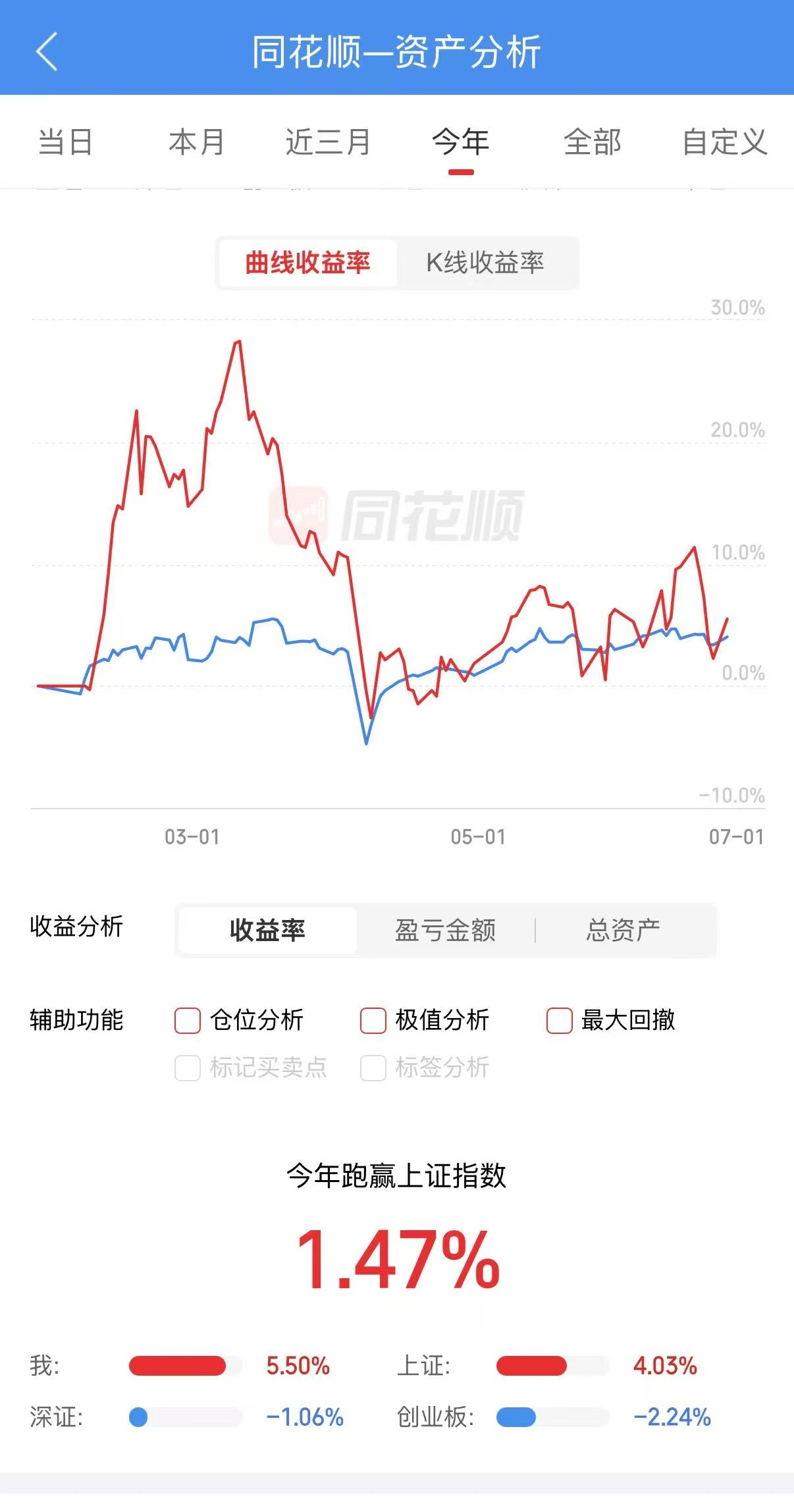
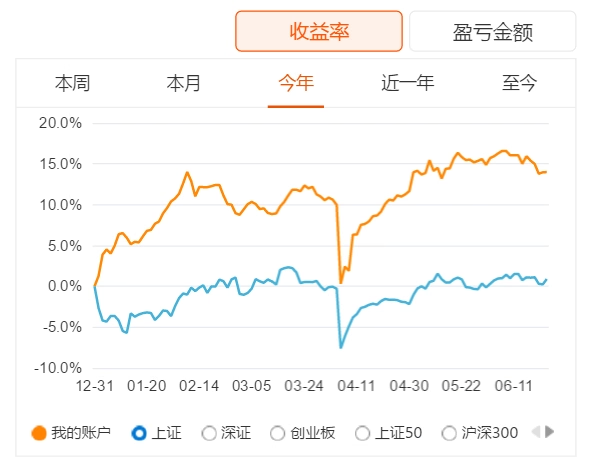
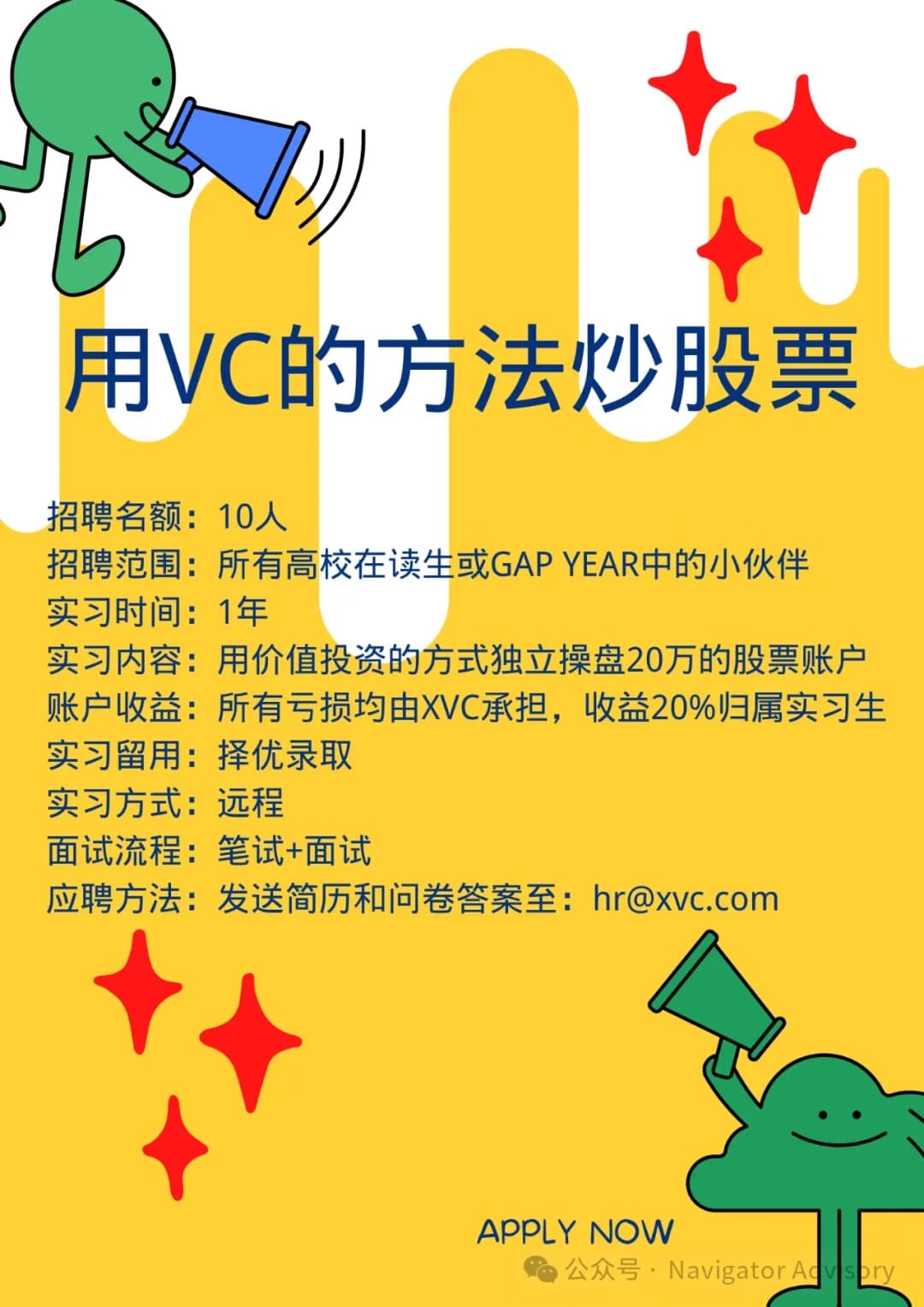
[Stock trading diary] [Loss diary]

I saw someone say that this post doesn’t exist, so I’m here to discuss it occasionally.

Note: This post contains no investment advice.

6 Likes

Year-to-date earnings chart:

3 Likes

Big A? I wish you happiness.

2 Likes

If one merely seeks to preserve one’s life in chaotic times, one does not seek fame among the lords.

A good bird chooses a fine tree to perch, and a virtuous minister chooses a worthy ruler to serve.

There was a person’s live trading before, but it never appeared again

3 Likes

When a forum member posts, A‑shares surge.

1 Like

I don’t understand the stock market, but I’m already intimidated by Yuan’s big moves.

2 Likes

Today’s Juyang indeed exceeded expectations; fortunately, I was fully invested and didn’t miss out.

Combining someone’s analysis with my own understanding, I rewrote it using AI for fun.

Innovative Drug Sector Analysis and Market Assessment

In 2025, China’s innovative drug sector is experiencing a historic development opportunity, driven by policy support, technological breakthroughs, successful overseas expansion, and other factors, the industry shows strong growth momentum [1][2]. The Hong Kong innovative drug index has risen over 55% year‑to‑date, while the A‑share innovative drug index has increased by nearly 20%; at the same time, innovative drug license‑out transactions reached USD 36.9 billion in the first quarter alone, demonstrating the industry’s huge vitality and a significant rise in global competitiveness [2][3].

Market Size and Growth Trend Analysis

Market Size Continues to Expand

China’s innovative drug market has been steadily growing and is projected to reach CNY 12.2 trillion in 2025, climbing to CNY 22.8 trillion by 2030, with a compound annual growth rate (CAGR) of over 13% [4][5][6]. This growth far exceeds the global pharmaceutical industry average, indicating that China’s innovative drug industry has entered an explosive growth phase [4][7].

According to the latest data, China’s innovative drug market is showing a “three‑horse‑carriage” growth pattern: the in‑hospital market is expected to grow from CNY 257.6 billion in 2024 to CNY 456.4 billion in 2030 (CAGR 10.0%); the out‑hospital market will increase from CNY 108.0 billion to CNY 206.4 billion (CAGR 11.4%); the most explosive segment is external licensing transactions, projected to surge from USD 51.9 billion to USD 265.9 billion, with a CAGR of 31.3% [8][7][6].

Record‑High Number of Drug Approvals

From January to May 2025, the National Medical Products Administration (NMPA) approved more than 20 Class‑1 innovative drugs, setting a near‑five‑year high [4][9]. This indicates a significant boost in China’s pharmaceutical R&D innovation, with innovative drug approvals entering an explosive period [4][10]. Recently, the NMPA approved 11 innovative drugs covering oncology, metabolic diseases, chemotherapy support, and other fields, such as Hengrui Medicine’s fumarate‑based famitinib capsules and Zijing Pharma’s hydrochloride gicoxib tablets [11][12].

BD Transaction Activity and International Cooperation

BD Transactions Reach Historical Highs

In 2025, BD (business development) transactions in the innovative drug field have exploded, reflecting a deep game of technology, capital, and market dynamics [2][3]. Data show that from the beginning of 2025 to now, total overseas innovative drug transaction value has reached USD 45.5 billion, with upfront payments of USD 2.2 billion, and the full‑year transaction scale is expected to set a new record [2][8].

In the global BD market, buyers are typically international giants with strong cash flows such as Johnson & Johnson, Roche, and Merck, while sellers are mostly innovative drug companies still in clinical research stages [2][3]. This cooperation necessity is confirmed by data: the proportion of foreign procurement pipelines from Chinese companies has risen year by year, from 10% in 2020 to 29% in 2023, and further to 31% in 2024 [2][3].

Major Transaction Case Analysis

In May 2025, Simcere Pharma and Pfizer struck a heavyweight deal, granting Pfizer exclusive global (excluding mainland China) development, production, and commercialization rights for Simcere’s PD‑1/VEGF bispecific antibody SSGJ‑707 [13][14]. Under the agreement, Pfizer will pay a non‑refundable, non‑deductible upfront fee of USD 1.25 billion, up to USD 4.8 billion in development, regulatory approval, and sales milestone payments, plus a double‑digit percentage of sales revenue in licensed territories [13][14].

This transaction set a dual record for the largest upfront payment and total amount for Chinese innovative drug outbound deals, with an upfront payment of CNY 9.024 billion—exceeding Simcere’s net profit accumulated from 2019 to 2024 [14][15]. It shows that high‑quality innovative drugs have gained strong international recognition, and global pharma are willing to pay higher premiums for Chinese innovative drugs [13][15].

Technology Area Distribution

In the 2025 BD landscape, ADC (antibody‑drug conjugates) and GLP‑1 (glucagon‑like peptide‑1) are the standout fields, becoming market focal points [2][3]. ADC technology dominates, accounting for USD 16.527 billion (42.5% of total) [2][16]. Emerging areas such as bispecific antibodies, GLP‑1 drugs, and small nucleic acids also show activity, representing 22.3%, 15.4%, and 10.2% respectively [16][2].

Innovative Drug Stock Performance Analysis

Innovative Drug Sector Outperforms

In 2025, Chinese innovative drug stocks have performed exceptionally well, becoming the biggest highlight in the pharmaceutical industry [1][17]. The A‑share innovative drug index has risen close to 20% year‑to‑date, while the Hong Kong innovative drug index has performed even better, reaching a 59% gain as of June 20 [18][19]. Statistics from the start of the year show that the Hong Kong innovative drug sector’s overall rise significantly outpaces the A‑share market, displaying a strong upward trend [18][20].

It is noteworthy that the performance of innovative drugs in the Hong Kong market far exceeds that of the A‑share market [18][19]. This phenomenon stems mainly from the concentration of high‑quality frontier innovative drug companies listed in Hong Kong [18][20]. Because innovative drug development requires massive capital and long cycles, A‑share listing standards that restrict unprofitable firms lead many innovative drug companies to choose the Hong Kong Stock Exchange [18][19].

Institutional Research Surge

As the innovative drug sector climbs, many innovative drug companies have been intensively covered by institutions over the past month, including BeiGene‑U, Maiwei Bio‑U, Warner Pharma, Ailis, etc. Wind data show that in May, BeiGene‑U was researched by 256 institutions, Maiwei Bio‑U by 101, Warner Pharma by 83, and Ailis by 60 [17][21]. This reflects that, under the current market environment, institutions are paying special attention to the investment value of the innovative drug sector [17][18].

Policy Environment Changes and Support Measures

National‑Level Policy Support

The 2025 government work report again mentioned innovative drugs and for the first time proposed “formulating an innovative drug catalogue,” demonstrating firm national support for the innovative drug industry [1][10]. The 2025 medical insurance catalogue adjustment work has officially started, and the first commercial health insurance innovative drug catalogue (“commercial insurance catalogue”) will be created, opening new payment channels for innovative drugs [22][11].

Reimbursement System Coordination

The coordination of the medical insurance catalogue and the commercial insurance catalogue will further expand reimbursement pathways for innovative drugs, enhancing market access and supporting the sector’s growth.

Risk Factors Identification and Mitigation Strategies

Main Risk Assessment

The innovative drug industry currently faces major risks such as market competition risk, technology risk, talent risk, etc. [37][38]. Market competition risk is manifested by intensified homogenized competition, with multiple companies targeting the same antigens, leading to serious product homogeneity [37][38]. Technology risk involves uncertainty of new technology routes and rapid iteration that can quickly break through R&D barriers [37][38].

Funding risk is also critical: innovative drug R&D requires huge capital, and a volatile financing environment may break the R&D cash chain [37][36]. Additionally, changes in international trade conditions and geopolitical risks may adversely affect overseas expansion and international cooperation [37][8].

Mitigation Recommendations

  • Technology risk: increase R&D investment, build technical barriers, focus on frontier technologies such as AI‑driven drug discovery, ADC, bispecific antibodies, etc. [1][16]
  • Market competition risk: pursue differentiated competition, identify niche segments, avoid homogeneous R&D [37][38]
  • International trade risk: adopt diversified overseas strategies to reduce dependence on a single market [37][8]

Future Market Development Assessment (2025‑2030)

Market Size Forecast

According to a forecast report released by the China Business Industry Research Institute, the Chinese innovative drug market size will reach CNY 12.2 trillion in 2025 [4][6]. Based on industry trends and driver analysis, the market is expected to grow to CNY 22.8 trillion by 2030, with a CAGR exceeding 13% [4][6]. External licensing transaction volume is projected to rise from USD 93.4 billion in 2025 to USD 265.9 billion in 2030, a CAGR of 31.3% [6][2].

Shifts in Driver Weightings

In the next five years, the influence weights of technology innovation, successful overseas expansion, and AI empowerment will increase markedly [1][27]. The weight of technology innovation is expected to rise from 20% in 2025 to 25% in 2030, while AI empowerment will jump from 10% to 15% [27][28]. Reform of drug payment systems will also become a key driver, as the synergy between medical‑insurance and commercial‑insurance catalogues provides more payment pathways for innovative drugs [22][11].

Global Competitiveness Enhancement

China’s innovative drugs are continuously improving their global standing; in 2024, Chinese projects accounted for 26.7% of all global pipelines under development, second only to the United States’ 49.1% [1][7]. By 2030, China’s share of the global innovative drug market is projected to rise from the current 15.2% to 19.0% [5][6]. With higher domestic original‑research innovation, deeper transaction‑mode innovation, and more multinational pharma integrating China into early‑stage R&D systems, BD transaction volume for Chinese innovative drugs is expected to break the USD 100 billion barrier between 2025‑2030, making China one of the world’s “dual centers” of pharmaceutical innovation [7][5].

Financing Market and Investment Trends

Financing Situation Analysis

In Q1 2025, total financing in the innovative drug field exceeded CNY 2 billion, with 19 financing events [1][36]. Financing rounds covered Angel + round, Pre‑A, A, Pre‑A +, A +, Pre‑B, B +, E, as well as strategic investments, staged financing, etc. Early‑stage financing accounted for 47.4%, reflecting capital’s focus on underlying technological innovation in innovative drugs [36][1].

Financing preferences in Q1 2025 showed a “hot at both ends, stable in the middle” pattern [36][1]. Early‑stage rounds were active, indicating continued exploration of the sector’s source of innovation; large‑scale later‑stage financing appeared frequently, providing strong support for mature companies’ strategic development; mid‑stage rounds remained steady, offering solid backing for the transition from R&D to commercialization [36][32].

Investor Sentiment

Several well‑known securities analysts believe that A‑share and Hong Kong innovative drug stocks will be the market hot spot for the entire 2025 year [21][37]. They argue that, driven by three rounds of technology breakthroughs, accelerated internationalization, and policy support, the innovative drug industry will develop rapidly and offer good investment value [21][19]. Institutional confidence in the sector stems from three main aspects:

  1. Policy‑driven tailwinds: the State‑owned Assets Supervision and Administration Commission (SASAC) encourages state‑owned enterprises to boost influence in biopharma through M&A and restructuring; medical‑insurance centralized procurement rules are being optimized; a commercial health‑insurance innovative drug catalogue is being introduced [21][24].
  2. Overseas cooperation breakthroughs and performance catalysts: rapid international licensing (nearly USD 45.5 billion in 2025) validates the global competitiveness of Chinese innovative drugs; innovative drug companies have delivered earnings that exceed expectations, with many reporting net‑profit growth of over 50% in 2024 [21][12].
  3. Low valuations, high‑tech appeal: the innovative drug sector is at historically low valuation levels, especially in Hong Kong; innovative drugs are seen as “China’s high‑tech crown,” representing new‑quality productivity, with widespread AI application, attracting overseas, tech‑focused, and mainland capital allocations [21][19].

Risk Factor Identification and Response Strategies

Major Risk Assessment

The innovative drug industry currently faces key risks including market competition risk, technology risk, talent risk, etc. [37][38]. Market competition risk manifests as intensified homogeneous competition, with many firms targeting the same antigens, leading to serious product homogeneity [37][38]. Technology risk involves uncertainty of new technology routes and rapid iteration that can quickly erode R&D barriers [37][38].

Funding risk is also critical: innovative drug R&D requires massive capital, and a volatile financing environment may break the R&D cash chain [37][36]. Moreover, changes in international trade conditions and geopolitical risks could adversely affect overseas expansion and international cooperation [37][8].

Mitigation Recommendations

  • Technology risk: increase R&D investment, build technical barriers, focus on frontier technologies such as AI‑driven drug discovery, ADC, bispecific antibodies, etc. [1][16]
  • Market competition risk: pursue differentiated competition, pinpoint niche markets, avoid homogeneous R&D [37][38]
  • International trade risk: adopt diversified overseas strategies to reduce reliance on a single market [37][8]

Future Market Development Assessment (2025‑2030)

Market Size Forecast

Based on a forecast report from the China Business Industry Research Institute, the Chinese innovative drug market size will reach CNY 12.2 trillion in 2025 [4][6]. Considering industry trends and driver analysis, the market is expected to grow to CNY 22.8 trillion by 2030, with a CAGR above 13% [4][6]. External licensing transaction volume is projected to rise from USD 93.4 billion in 2025 to USD 265.9 billion in 2030, a CAGR of 31.3% [6][2].

Changes in Driver Weightings

Over the next five years, the influence weights of technological innovation, successful overseas expansion, and AI empowerment will increase significantly [1][27]. The weight of technology innovation is expected to rise from 20% in 2025 to 25% in 2030, while AI empowerment will jump from 10% to 15% [27][28]. Reform of drug payment systems will also become an important driver, as the coordination of medical‑insurance and commercial‑insurance catalogues will provide more payment channels for innovative drugs [22][11].

Global Competitiveness Improvement

China’s innovative drugs are continuously enhancing their global position; in 2024, Chinese projects accounted for 26.7% of all global pipelines under development, second only to the United States’ 49.1% [1][7]. By 2030, China’s share of the global innovative drug market is expected to increase from the current 15.2% to 19.0% [5][6]. With a higher proportion of original‑research innovation, deeper transaction‑mode innovation, and more multinational pharma integrating China into early‑stage R&D systems, BD transaction volume for Chinese innovative drugs is likely to surpass the USD 100 billion mark between 2025‑2030, truly becoming one of the world’s “dual centers” of pharmaceutical innovation [7][5].

Investment Recommendations and Industry Outlook

Investment Allocation Suggestions

2025 is widely regarded by institutions as the “first year” of a three‑plus‑year investment cycle for innovative drugs [1][21]. It is recommended to focus on biotech or leading innovative drug companies with strong R&D capabilities, high commercialisation potential for core products, and bright overseas prospects [1][37].

According to a research report from GF Securities, top recommendations include innovative drug‑device companies with heavyweight product data catalysts and overseas competition potential, Pharma companies with a second growth curve, as well as CXO and upstream firms in the innovative drug supporting industry chain. The top ten suggested targets for the year include Hengrui Medicine, Kangfang Bio, Innovent, BeiGene, Hansen Pharma, DIZHE Pharma, Stone Pharma Innovation, as well as ADC leaders such as Kelun BoTai and Bailing Tianheng [37][39].

Sub‑Sector Opportunities

ADC Technology: As the technology area with the highest overseas transaction amount in 2025, ADC drugs still hold massive growth potential [2][16]. ADCs can deliver cytotoxic agents precisely to tumor cells, combining targeting and killing power, showing great promise in cancer therapy. Recent years have seen active transactions and breakthroughs by several Chinese companies in this field [2][16].

AI‑Driven Drug Discovery: With the development of AI models like DeepSeek, AI‑driven drug discovery will become an essential tool for improving R&D efficiency [30][31]. AI can accelerate target identification, molecular design, and clinical trial optimisation, markedly shortening development cycles and reducing costs [28][26].

Bispecific Antibodies: Demonstrating superior efficacy over traditional drugs in clinical trials, bispecific antibodies have considerable commercialisation prospects [16][40]. Products such as Simcere’s PD‑1/VEGF bispecific antibody SSGJ‑707 and Kangfang Bio’s AK112 have achieved important breakthroughs, attracting high attention from international pharma [13][15].

Industry Development Outlook

Looking ahead, China’s innovative drug industry is expected to maintain strong growth momentum [1][5]. More innovative drugs are anticipated to receive approval in the second half of 2025, with accelerated internationalisation and continued improvement of fundamental industry conditions [4][5]. With intensified policy support, enhanced technological innovation capability, and a rebound in capital markets, the sector is poised to achieve a historic leap from “follower” to “leader” [1][5].

Conclusion

In 2025, China’s innovative drug industry is at a historic development juncture, propelled by policy support, technological innovation, and international cooperation, exhibiting robust growth momentum and broad development prospects [1][7]. Market size continues to expand, BD transaction activity reaches historic highs, and stock performance stands out, reflecting the sector’s great vitality and potential [4][2][18].

AI technology’s deepening application in innovative drug R&D continuously improves efficiency and reduces cost [28][26]. Representative companies show solid performance, overseas success cases keep emerging, and China’s global competitiveness in innovative drugs keeps rising [12][33][5]. The coordinated adjustment of medical‑insurance and commercial‑insurance catalogues provides more payment channels for innovative drugs [22][11].Despite facing risks such as market competition, technological iteration, and capital investment, China’s innovative drug industry actively responds through differentiated competition, increased R&D investment, and diversified overseas strategies [37][1]. Over the next five years, the market size of China’s innovative drugs is expected to maintain an annual growth rate of over 13%, and its global share will further increase, potentially becoming one of the “dual centers” of global pharmaceutical innovation [4][5].

Investors can focus on high‑quality innovative drug companies with strong R&D capabilities, significant commercialization potential, and bright overseas prospects, especially leading firms in niche areas such as ADC technology, AI drug discovery, and bispecific antibodies [37][39]. As China’s innovative drug industry continues to grow, it will bring more high‑quality innovative medicines to patients and contribute more Chinese wisdom and solutions to the global pharmaceutical industry [1][5].

1 Like

Innovative drugs—seeing that Supervisor Gong and Director Wang had previously produced reports with completely opposite stances felt very interesting. I had never paid attention to this field before, but it has now developed.

How much annual return can GPT achieve from stock trading? The fundamental analysis of o3-pro is still very reliable.

The defense sector slipped up.
Yesterday I thought the ceasefire and the parade were a positive, but once the upside was gone, it fell apart.
I feel my timing judgment was off.

1 Like

Is the market going crazy today? Three big bullish pillars…

1 Like

You can try simulating one.

The rise is inexplicable; is the ceasefire news really that good? Also, although I like the news about Cross‑border Payment Pass, I think its impact is not that large.

Relying solely on news to trade stocks doesn’t work; any news can be interpreted in two ways.

2 Likes

Sleeping can cause losses. Don’t stay up late…

Yesterday I woke up late, placed an order with Hongye Futures (弘业期货), and didn’t have time to cancel it.

Today I woke up late, didn’t do the T for cxy and xd, and suffered a loss of 2 points.

https://mp.weixin.qq.com/s/Qtx45hDMOYSuzuN3OGcocg

2 Likes

I did an aerial overview, see how it turns out :eyes: