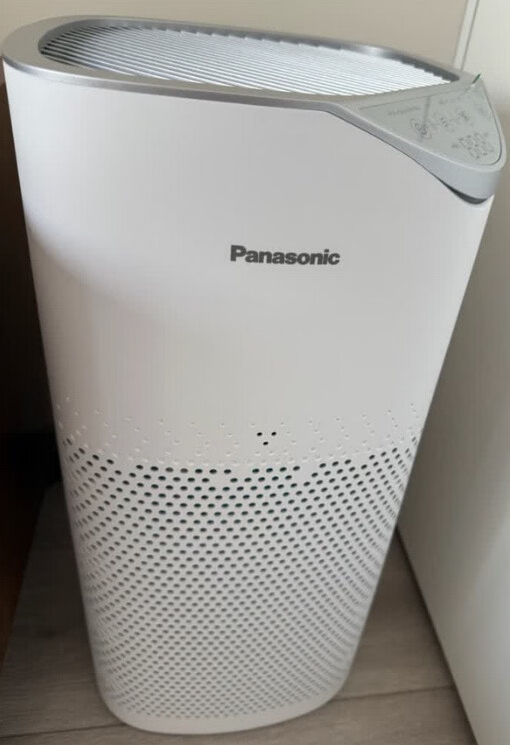
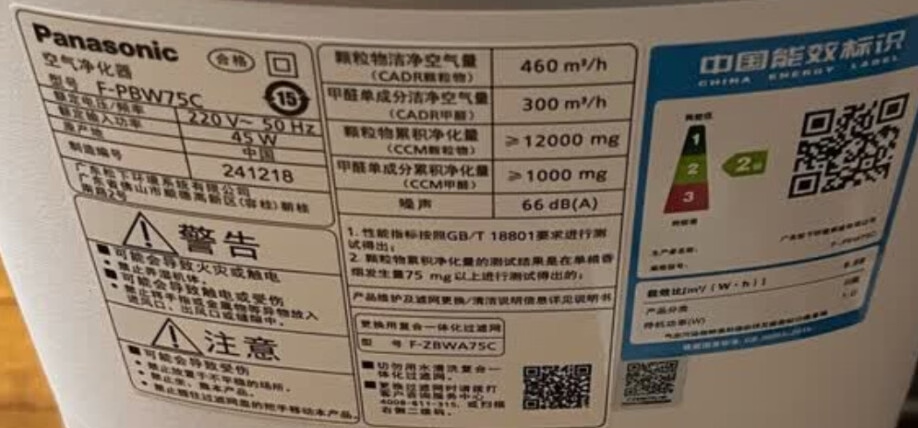
I have bought three air purifiers over the years.
The first one was from a major domestic white‑goods brand, about ¥600, filter ~¥100, a flat carbon‑cloth filter that inevitably became acidic after two months.
The second brand was the same, but I bought the high‑end model, about ¥2,000, filter ~¥600, a cylindrical filter. The new unit emitted a peculiar smell; looking at product reviews, others reported the same, and the odor persisted even after long use. Some buyers called it a “carbon smell,” attributing it to the activated carbon in the filter; a seller said it was due to the packaging after production and would disappear after a while. Later I saw other reviews saying the smell came from the polymer skeleton of the filter. I was scared that it not only failed to purify the air but actually caused pollution, so I returned it.
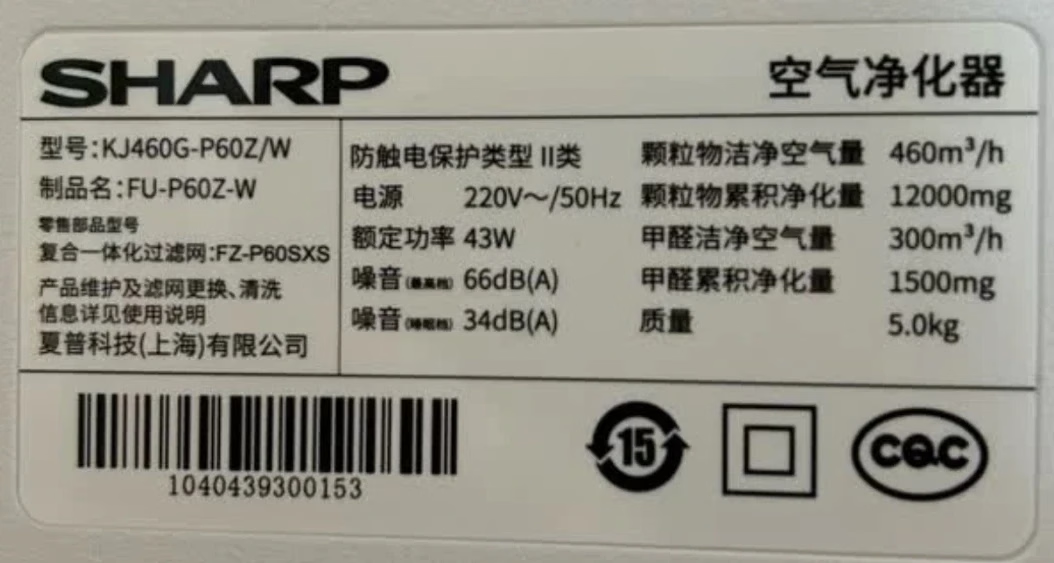
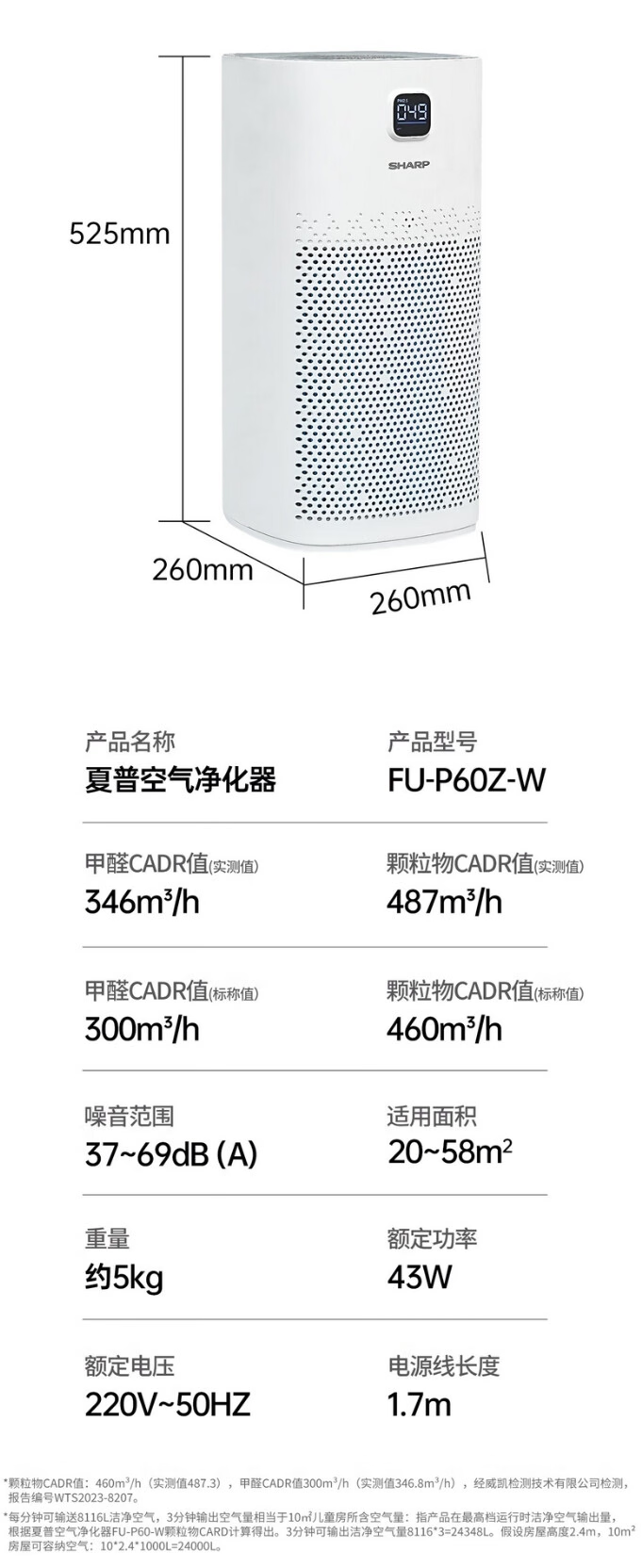
The third one was a Japanese brand acquired by Hon Hai, about ¥900, filter ~¥250, also a cylindrical filter. With the previous experience in mind, I specifically checked the “no returns after opening/using” notice, chose not to install the filter, and when I turned it on the airflow smelled strongly of plastic, so I returned it as well.
I kept scanning the market and found nothing but a lot of exaggerated advertising—nanotech, negative ions, etc.—which made me uneasy. Most of them use electrostatic filter cotton mixed with activated carbon, which tends to become acidic over time, and I’m worried about similar odor‑pollution issues. Foreign brands like Honeywell and IQAir are too expensive (the cheapest models are >¥2,000). The others are either fake foreign brands or domestic. Even a trustworthy brand like 3M has no self‑operated store selling air purifiers; only an official flagship store carries a single, years‑old model.
As an engineering student, I think an air purifier is nothing more than a fan plus a filter. You can buy 3M N95 HVAC electrostatic filter cotton yourself. A 3M T3 filter, 38 × 300 cm, costs about ¥160 per roll and works well with a blowing device—an absurdly good price‑performance ratio. You can simply attach it to an HVAC filter, or for a more complex setup, buy a fan and mount the filter appropriately (e.g., 3D‑print a housing) for filtration.
This is sufficient for filtering PM2.5. As for formaldehyde and other volatile organic compounds (VOCs), I found an online product called Cleverin that slowly releases ClO₂ and can oxidize HCHO. Later I plan to make my own activated carbon and put it in a container, similar to a car’s carbon canister.
Why make my own activated carbon?
When I search online for activated carbon or formaldehyde‑removal products, the results are products I don’t trust. Many ads tout “nanomineral crystals”; regardless of the mineral, I’m hesitant to deal with nanomaterials, which are high‑tech. Moreover, some people claim to embed radioactive substances into such “activated carbon” to decompose formaldehyde via ionizing radiation. (Search for “purifying mud shows strong radioactivity”).