This thread will be updated gradually with a brief introduction to the exchange program newly added in 2024, as well as the selection process /bar, and after it is implemented, attempts will be made to slip in updates into daily life.
Project Nature
It appears to be a new project created by Qian Institute leveraging the opportunity of Professor Ding Zhaozhong’s participation in the Everest program to connect people. The main goal is to select students to work at CERN (European Organization for Nuclear Research) on tasks such as data analysis and software/hardware optimization. Its nature lies somewhere between a summer school and a summer research program.
Project Application
How to Apply
During the first few days of the application period there is loud, festive promotion. According to the Qian Institute’s public account, you just need to submit a paper application form and an electronic application form.
Motivation for Applying
Applicants have various reasons. My own reason for applying to the AMS project was largely unexpected; I didn’t anticipate that after finishing my earlier research experience I could still join a strong group. So I signed up for the AMS winter‑term “experience life” program, was later selected, and then decided to head to Switzerland to finish a manuscript and also spend the New Year there.
If you are a physics student considering a PhD at XJTU, you might want to think seriously about this project. It will select three students for a joint training program between CERN and XJTU, and it currently looks quite promising.
More benefits will be discussed after the program starts.
Selection Process
A fairly rigorous, research‑oriented institutional selection process.
First is an interview conducted entirely in English. There are two interviewers: a professor from MIT representing CERN, and a PhD (an alumnus of XJTU who helped connect this project). The interview lasts roughly ten minutes; if your background is thin, it may be shorter. You first introduce yourself, then the interviewers ask questions mainly about the direction of your previous research, your results, your ideas for future work, and your thoughts on the work you would do at CERN. There are also some personalized questions. For example, I once had a first‑author paper on a machine‑learning theory topic, and the senior professor asked me to explain Augmented Lagrangian Method (ALM). I had brushed up on convex optimization over the summer and could give a decent, if not perfect, explanation.
Overall, a high level of English proficiency is required—at least enough to speak and answer questions. Among the applicants I saw, there were many “super‑stars” with TOEFL 105+ or CET‑6 600+. From the final selection results, the ranking appears to be:
Research experience / high‑impact results ≫ English score ≈ rank > major > competition experience > others.
Because the project involves data processing and is run by a nuclear research center, there is a clear preference for students from computer science or physics backgrounds.
Below is my background (provided for reference only; I dislike judging people solely by quantitative metrics, so this is just a rough sketch).
- Rank: roughly top 10 % of a small CS‑focused class (small‑class percentages are hard to convey, sorry).
- Three research periods: primary author on one paper each in machine‑learning theory/optimization and graph neural networks; currently working on generative models.
- CET‑6 600+, IELTS 7.5 (taken in middle school) with speaking 8.0, but the scores have long expired and are therefore not listed; I consider myself “silent English,” so I only meet the minimum speaking bar.
- Competition experience limited to a few national‑level algorithm contests (non‑XCPC) and some useless mathematical modeling and English contests.
Preliminary Preparation
Standard preparation for a university exchange program, covering clothing, food, accommodation, and transportation.
Accommodation
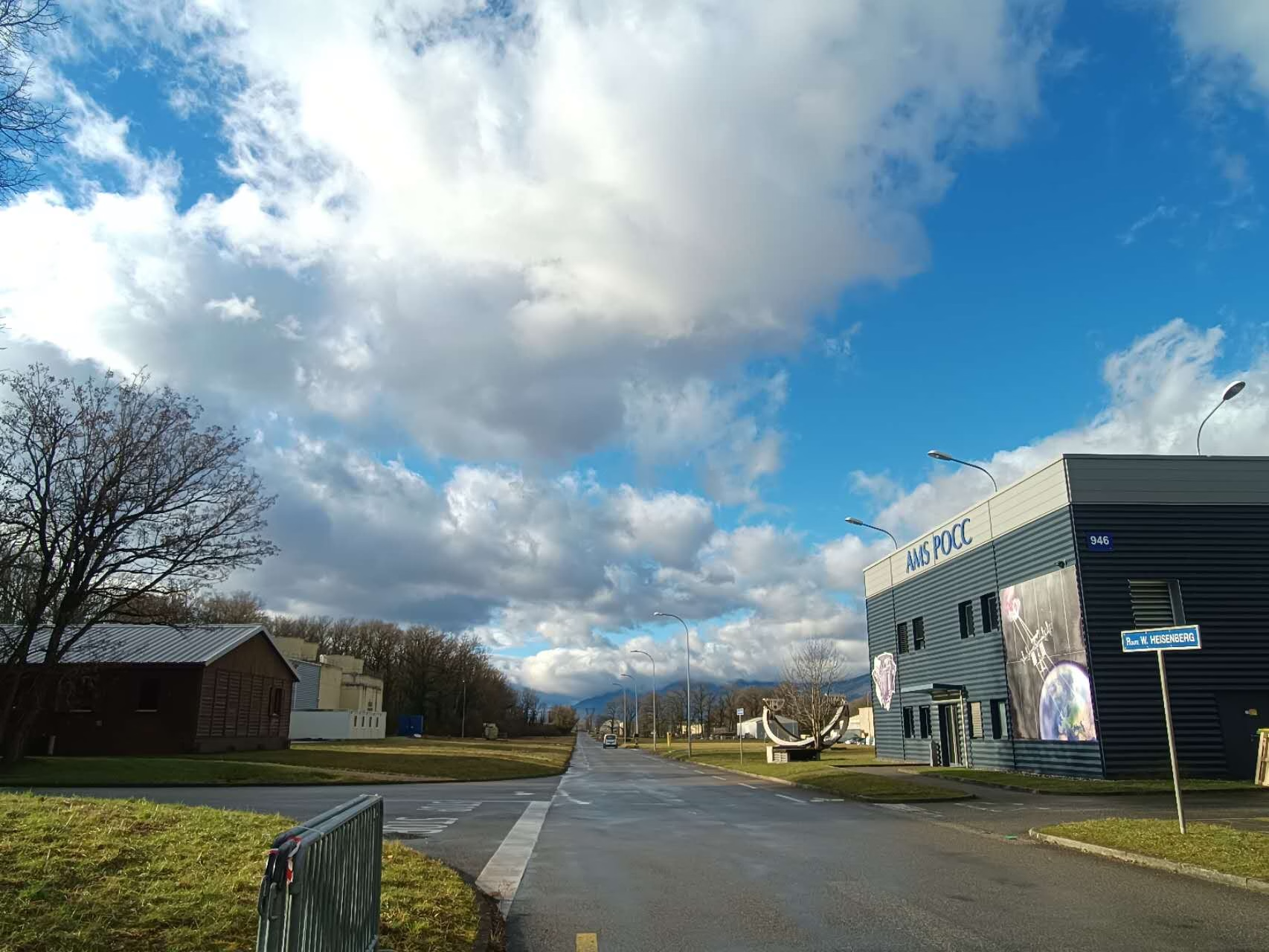
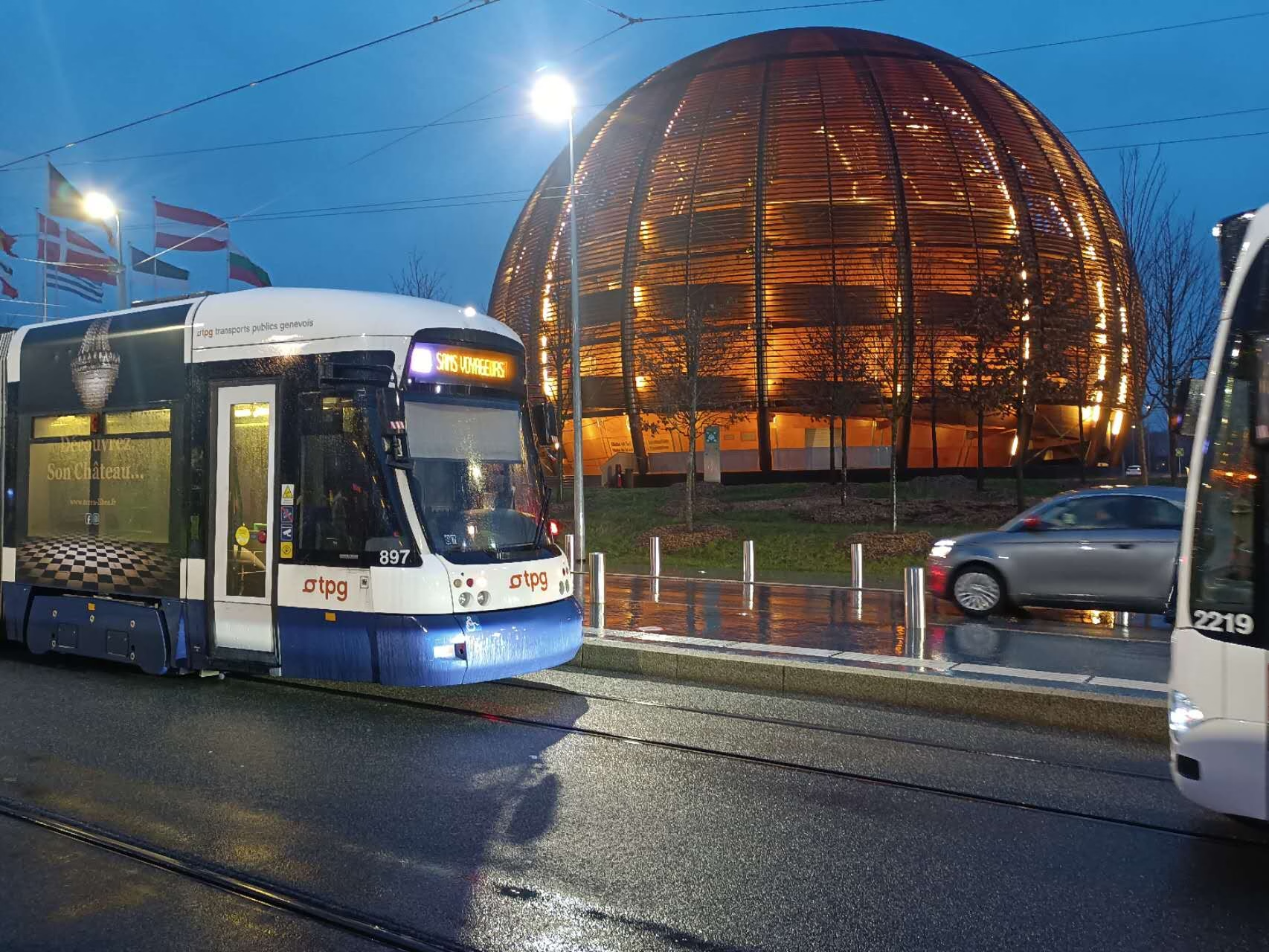
The lodging is a hotel inside the CERN campus. By Swiss standards—where land is scarce and the cost of living is extremely high—the price is quite reasonable. However, you must book well in advance; otherwise rooms near public transport may be sold out.
Visa
Keep the invitation letter and other documents sent by AMS. When applying for a visa, you can present them to obtain a fee‑waiver.
So strong!!!
CERN… somehow reminded me of Steins;Gate
Yep, we often run over to the French supermarket there to shop. There’s also a Chinese supermarket nearby that sells Lao Gan Ma and White Elephant, and now we basically rely on cooking ourselves in the communal kitchen and subsisting on White Elephant noodles ![]()
The first week after arriving was mainly spent meeting with my advisor and adapting to the environment.
Advisor
I’m not sure if I can put the names directly here. CERN has arranged a total of seven advisors for visiting students to meet sequentially for two hours each. We haven’t finished all the meetings yet, but my first impression is that for physics students who aspire to work in HEP, calling this place “paradise” is not an exaggeration. The advisors are generally very nice; there are Europeans, Russians, and American professors. At first, I (OP) wasn’t used to intensive English communication, so the advisors deliberately spoke very slowly, tried to avoid obscure words, or used scrap paper to draw,
During my time at CERN, a paper I had previously submitted to a B conference’s journal track received a minor revision, and the editor promptly accepted it for publication; I also secured an oral presentation at an A conference, which turned out to be an unexpected benefit beyond the networking.
Minor Remark
This entry will be continuously updated.
- If you come to CERN, it is recommended to exchange both Swiss francs and euros; you will most likely stay in Switzerland but spend in France. In French supermarkets, €0.5 for 1.5 L fresh milk, €5 for 200 g fresh salmon is amazing. As for Swiss supermarkets, do you like ¥80 for 100 ml Head & Shoulders? (瑞超的话喜欢我 80 块 100ml 海飞丝吗?)
- When you are older and in the Swiss‑French border area, it is best not to speak English in front of the French; it feels very discriminatory toward English.
- If you stay at the CERN hostel, remember to bring your own slippers; the hotel does not provide them and most nearby supermarkets don’t sell slippers.
- Always cross at a zebra crossing! Cars here generally drive very fast, and many intersections have no traffic lights. However, when you are a short distance from the crossing, they will slow down and stop. If you cross the road directly, you may get hit.
- When shopping at a supermarket, bring your own bag/shopping bag. A regular shopping bag starts at €2.

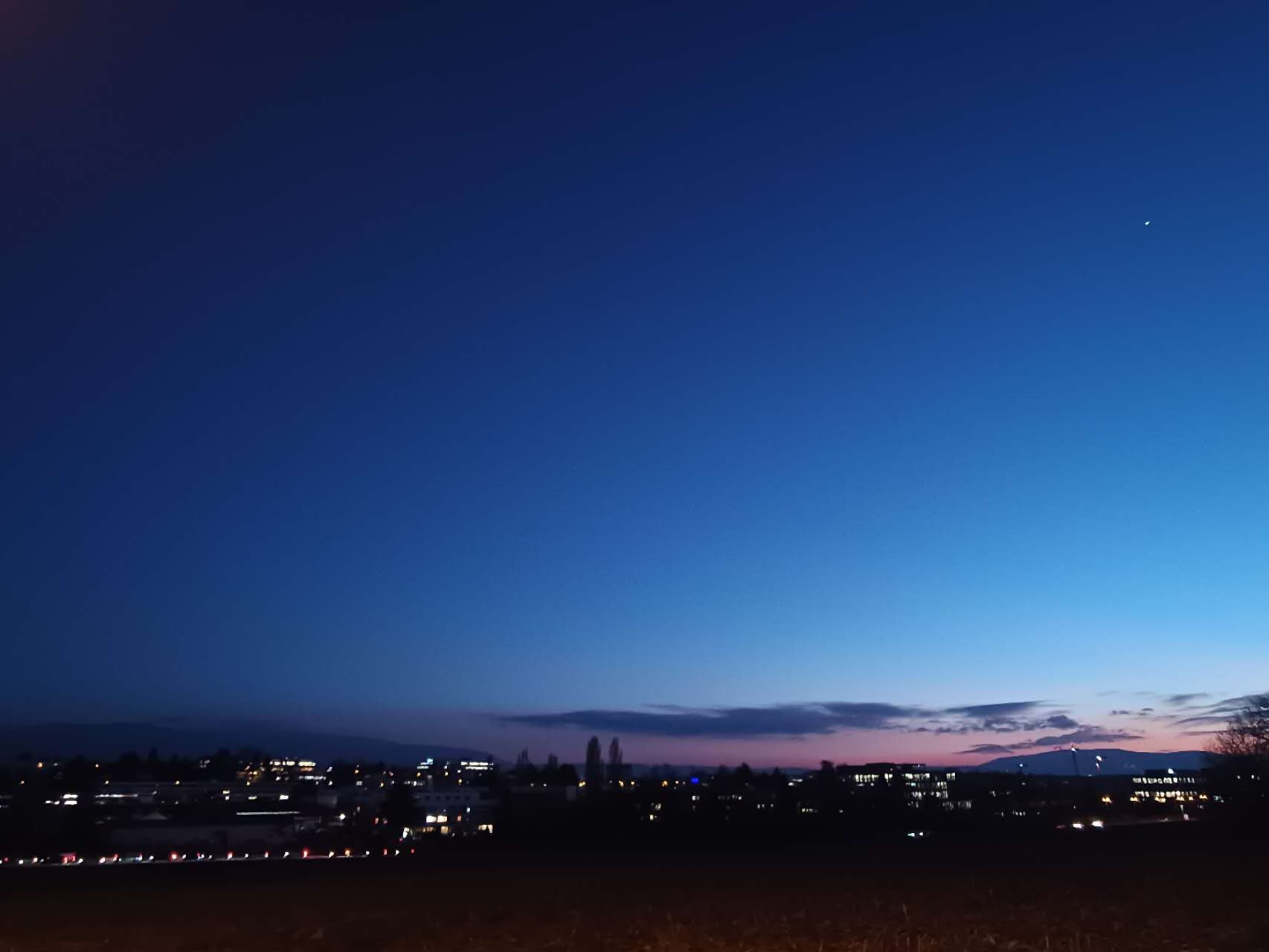
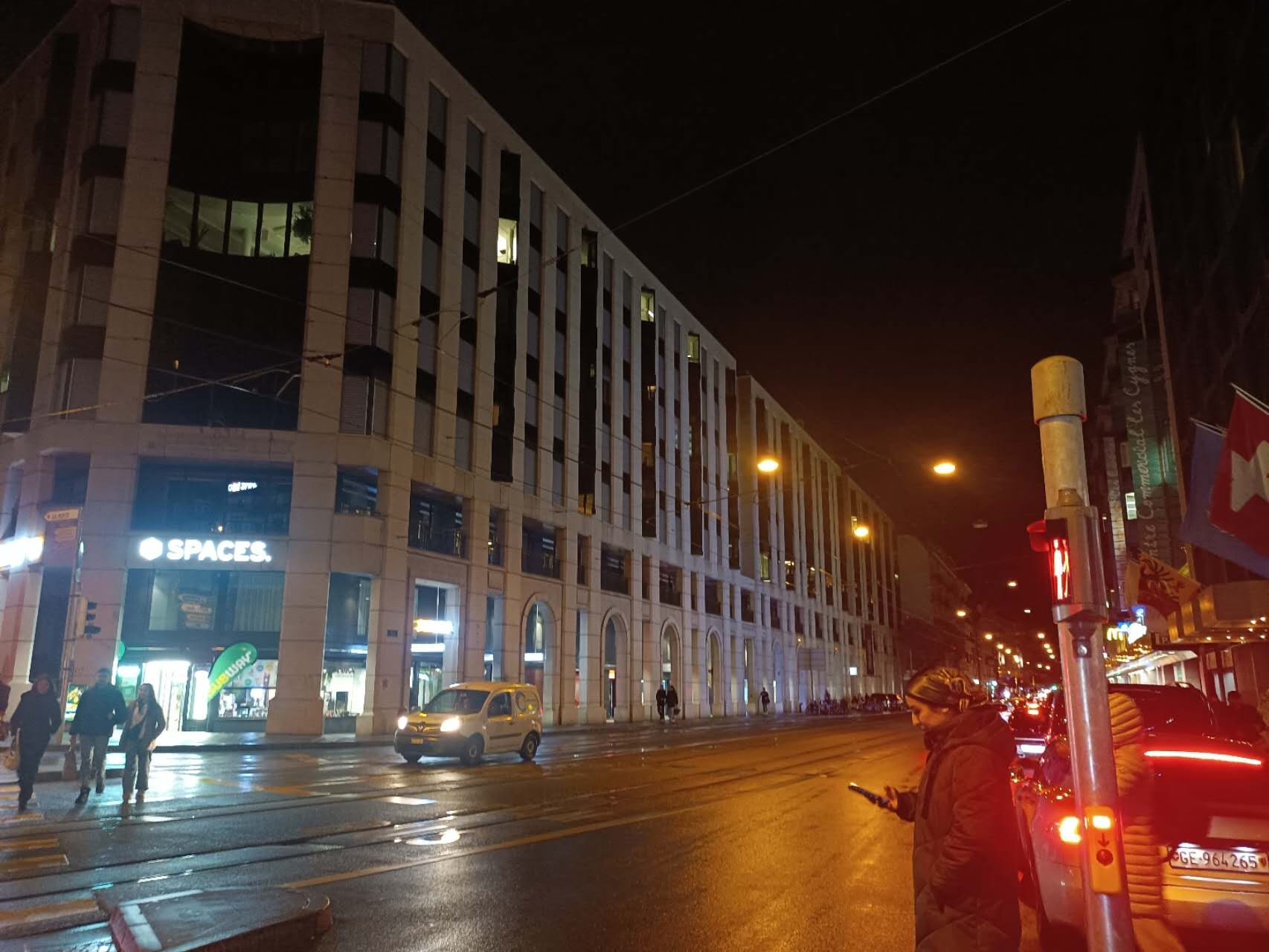
The evening in Meryin Village, after the schedule relaxed, I went back into the city of Geneva to take a look.
So beautiful
I roughly guessed a bit, yi jia has been at MIT all along.
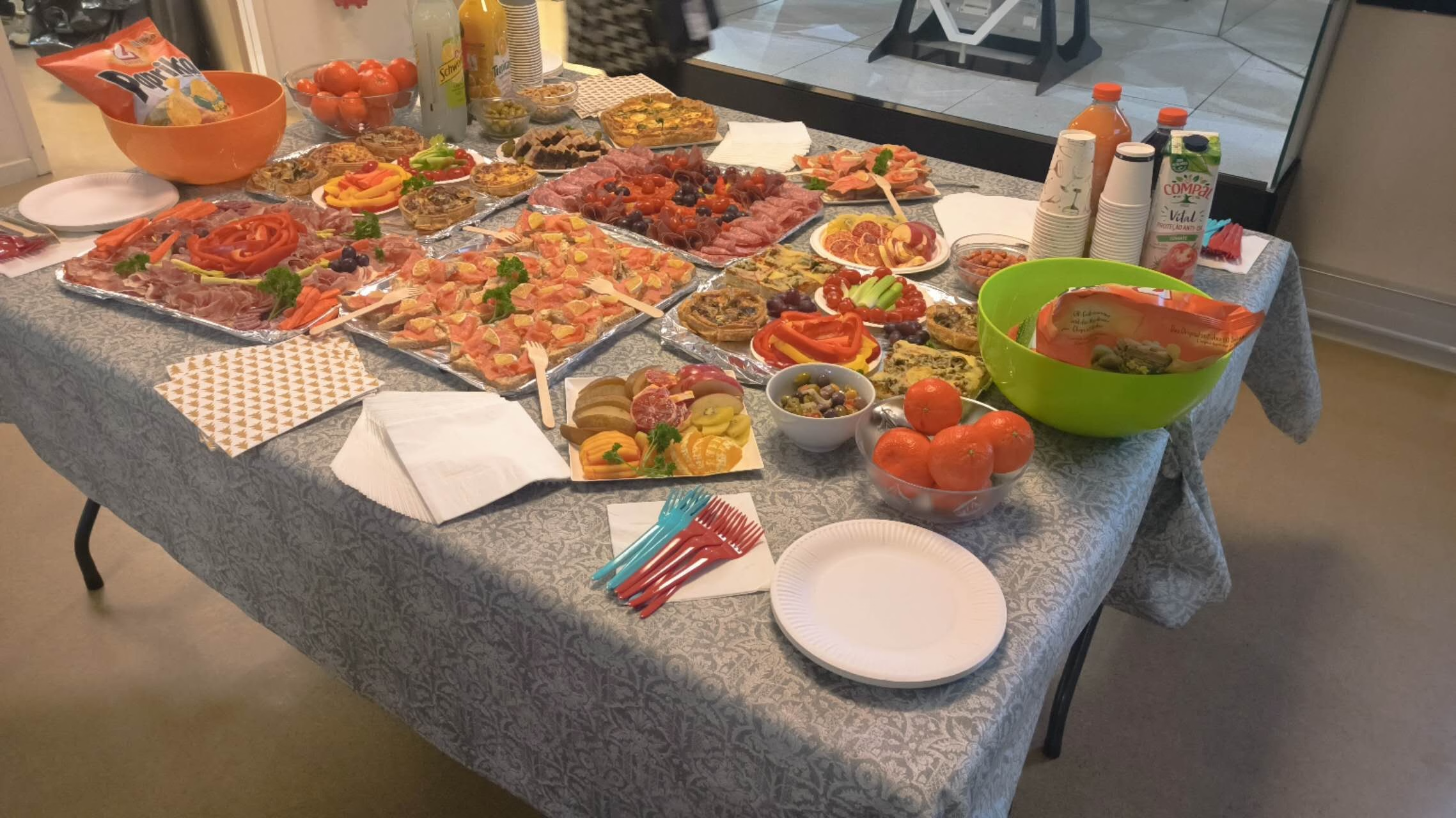
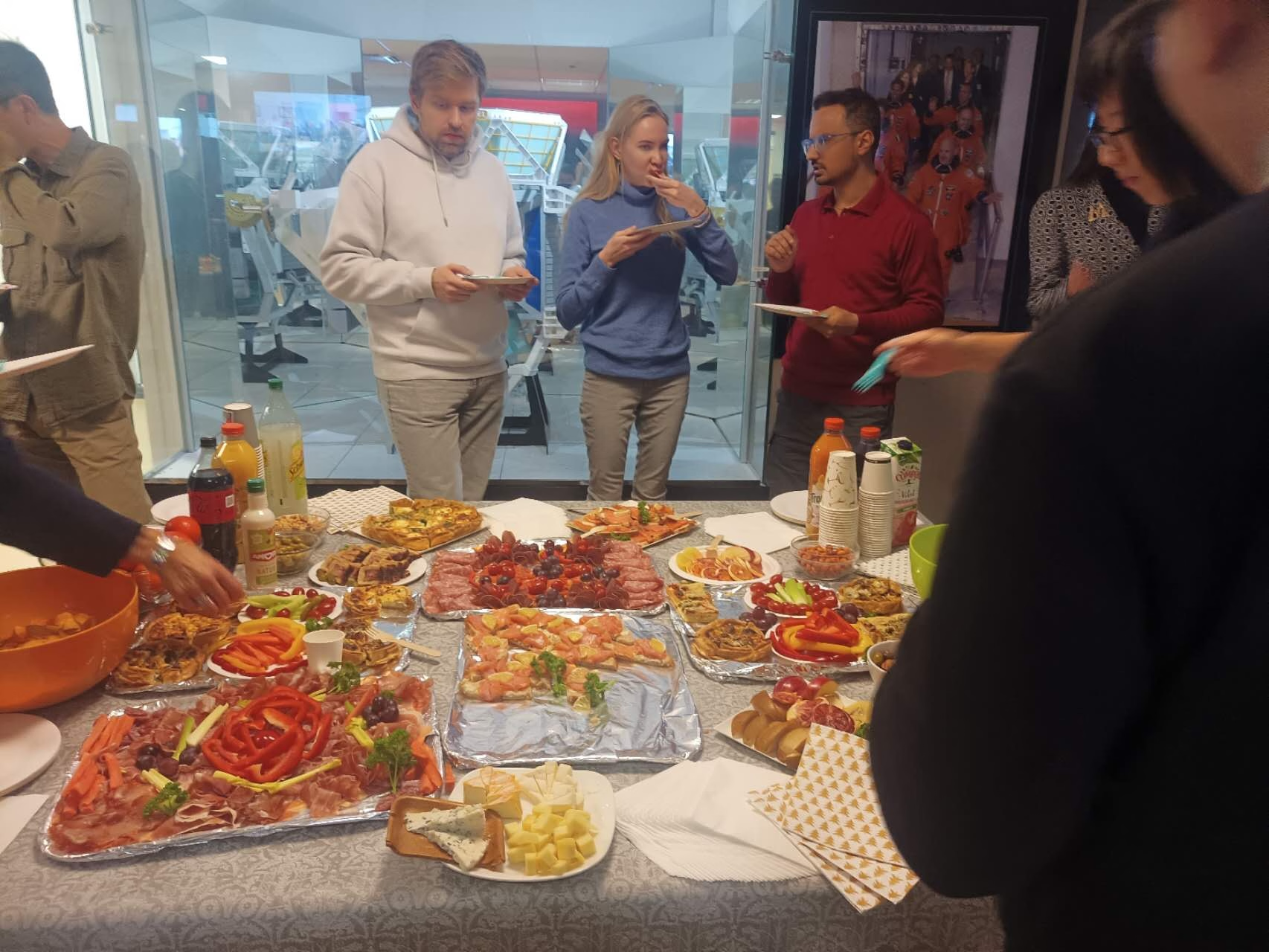
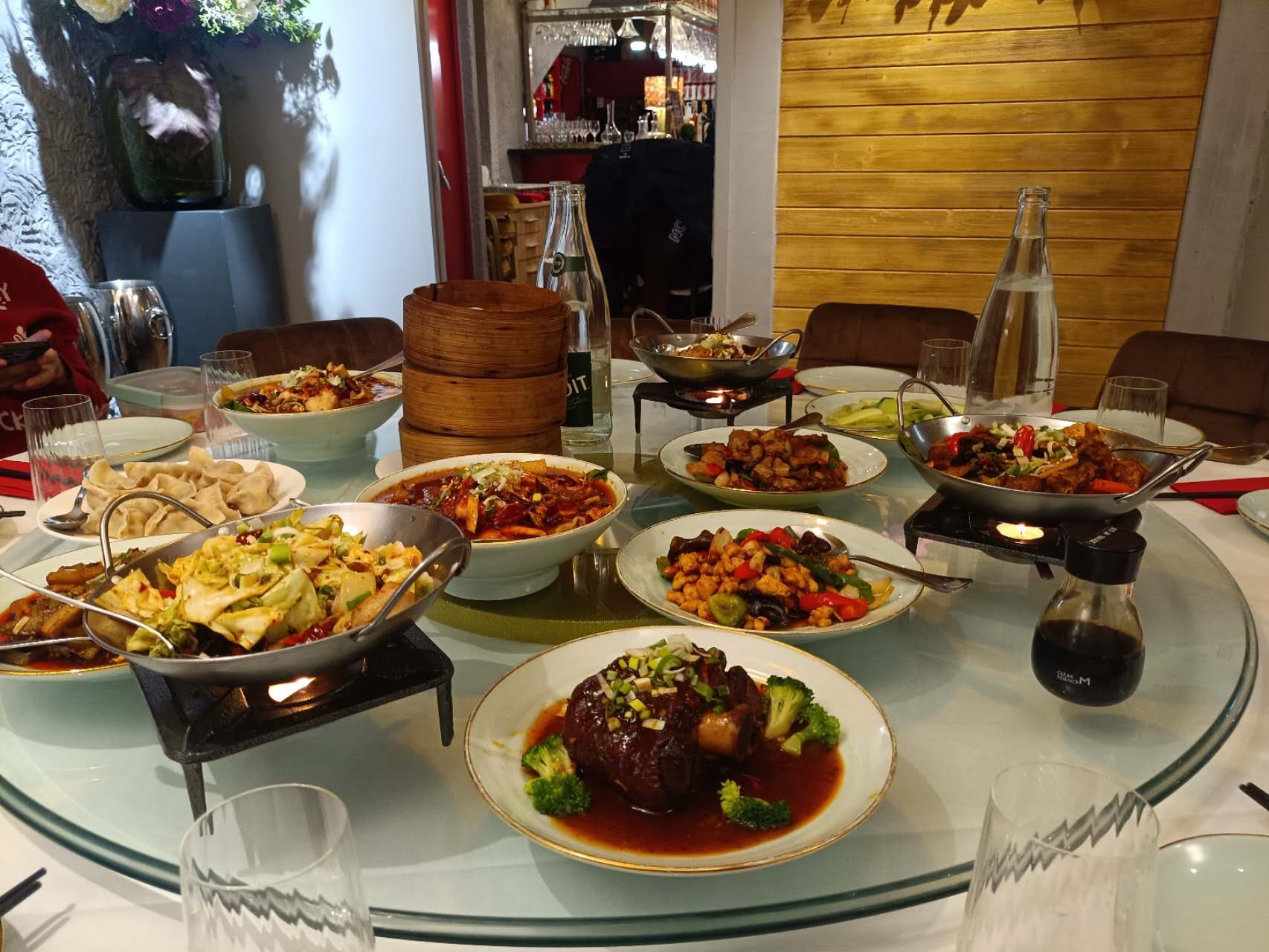
Although I’m not really interested in AMS, the party was well organized, and it was the best meal I’ve had since coming to CERN (aside from the blue cheese
)

Indeed the best meal

Here’s another party picture. I asked the MIT senior mentioned above; AMS doesn’t even celebrate Christmas, so hosting a party for visiting students is an extremely rare situation.


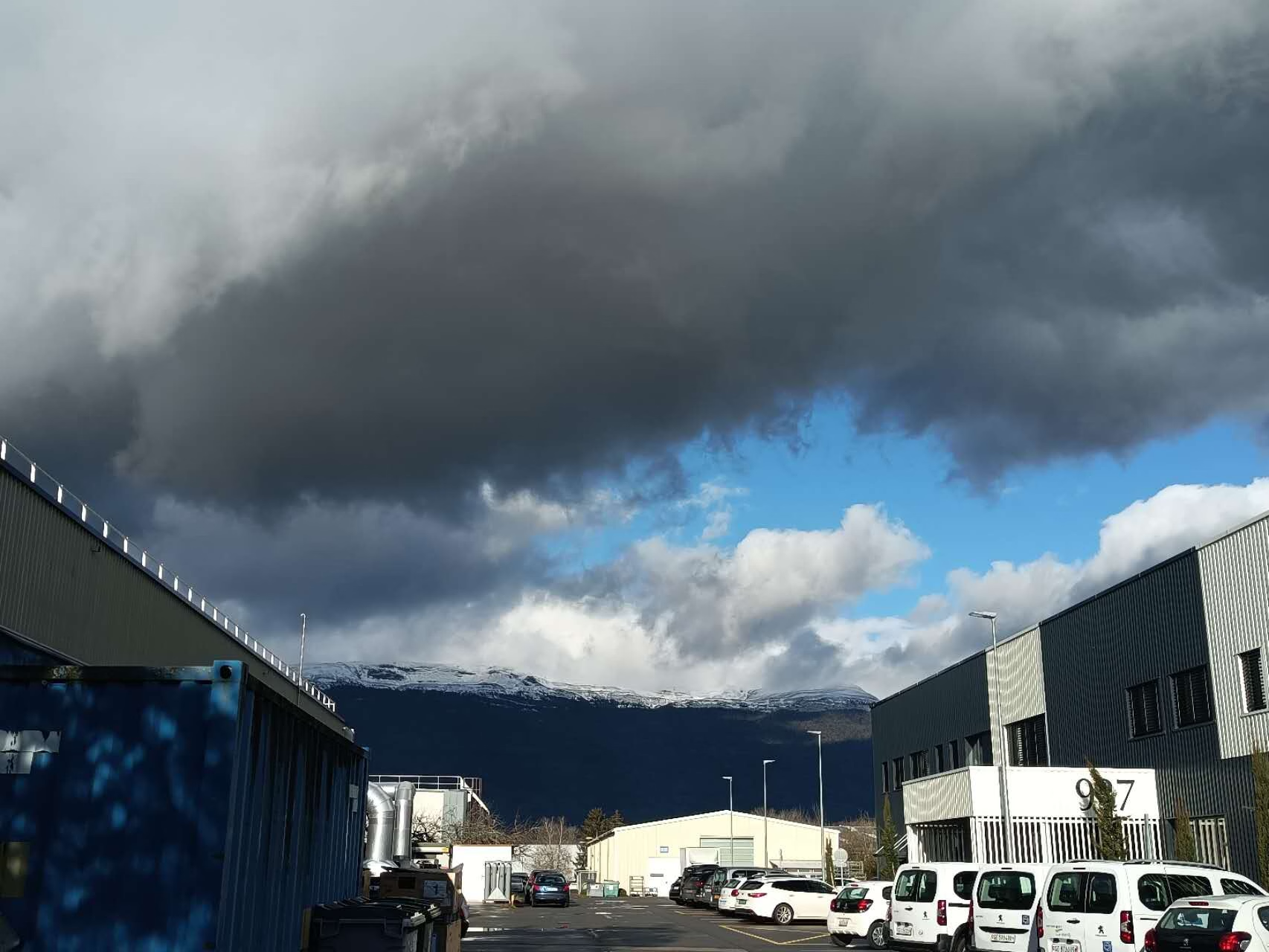
The snow-capped mountains in Geneva are really beautiful, and because Geneva is near the lake with strong breezes, the air is relatively good, making it very clear to see.
Yesterday at the party I chatted with other Chinese seniors who have been at CERN for a while, and it seems that after this project, XJTU will also try to establish research centers/groups similar to Southeast‑CERN and Shandong‑CERN at our university. The three selected XJTU‑CERN joint‑training PhD students will become the backbone of this group. It seems they can directly stay at XJTU and obtain a faculty position.
First of all, happy New Year to the forum friends ![]()
Before New Year’s Eve we discussed the possibility of having cheese hot pot for the New Year, but finally decided not to risk it and instead found a Chinese restaurant in the city to eat.
The restaurant is called Jingyan, but the dishes feel like Sichuan cuisine. The waiter was quite slick
, recommended drinks and directly pushed Evian and sparkling water. We thought there were no other drinks, but after asking the counter we learned we could also choose diet cola, which was half the price; Evian and sparkling water were 9 CHF per bottle, and the sparkling water tasted like Lao Shan bath water.
But the dishes were still pretty good (though a bit like pre‑made dishes), and we managed to eat something good for the New Year.
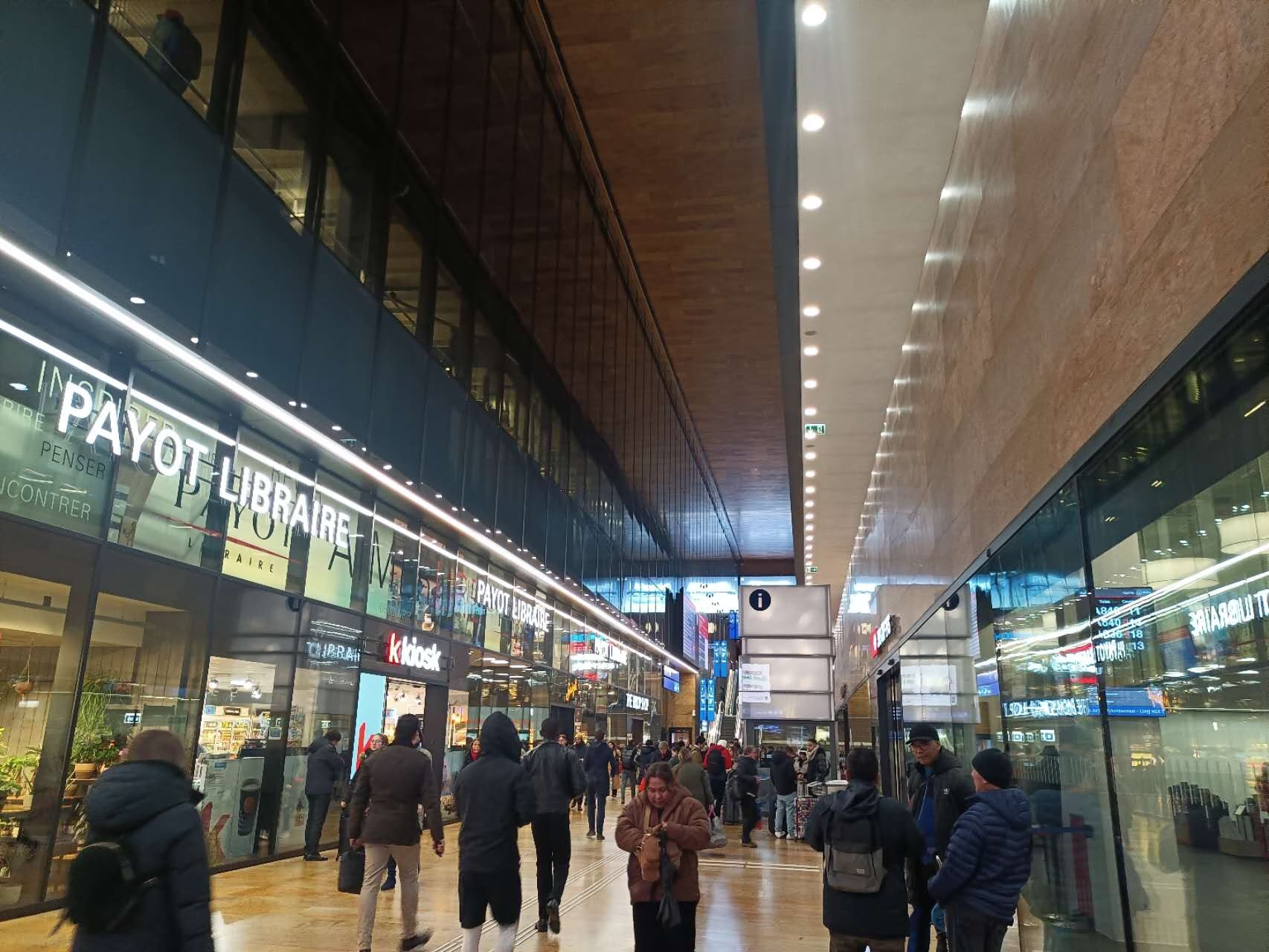
Next to it is the Geneva train station; taking the train here feels similar to taking the subway back home, even more casual—no ticket check, no security check, you can directly board the platform.


sern, it should be adapted from this.
The original film is the European Atomic Energy Agency.
In reality, the European nuclear research organization is called CERN, not SERN.
In the original work it also says that John Titor was looking for the IBN 5100, whereas in reality it is the IBM 5100; both are adaptations, right?