For warning
Avoid the mindset of 【circling in place in the swamp】
1 Like
2 Likes
Basic Assumptions
Almost everyone’s brain is stable, consistently following a certain signal and consistently shielding other signals
Examples from East and West
Dante follows Beatrice and the messenger Valkyrie, and shields the demons (temptations) of various levels.
In Yueyang Tower Record “not delighted by external things, not saddened by oneself,” the shielded part is the weather that changes on a daily cycle such as “drizzling rain, bright spring scenery” (the feeling of observing things).
Historical Review: High School
Although many criticize the high‑school experience, it is worth revisiting because “Everything Is A Case Study.”
What signal did we follow in high school? The portfolio of grades/rankings/understanding of knowledge.
- Why high‑school students cannot treat grades as a signal: in the short term, grades depend heavily on the difficulty of the exam, so their main component is noise introduced by the test makers.
- Why high‑school students cannot treat grade Z‑Score/rankings as a signal: if everyone uses ranking as a signal, the whole system becomes a zero‑sum game, heavily dependent on the luck of the first exam. Many people then deceive themselves about what they are good or bad at, which creates a false identity and accelerates polarization.
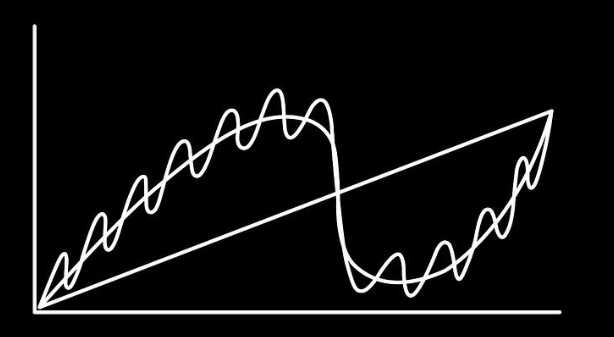
- Why understanding of knowledge should be the signal: most people ultimately aim for the college‑entrance exam score, whose main component is an increasing function over time. The amount of knowledge, whether in the short or long term, is a stable increasing function, unaffected by the size of the initial value (luck) and does not fluctuate dramatically with external conditions.
Creation/accumulation of knowledge:
- My understanding of xxx has become clearer (progress).
- Six months ago I was very foolish (progress).
- If my thinking hasn’t changed much compared with six months ago, it means I haven’t made much progress in the past half‑year (a warning sign).
- I often ask myself: where does this belief come from? If it only traces back to “xx said it” and cannot go further (a warning sign).
- Which of these subjects will be more important to me ten years from now? (My understanding at the time was biology, English, mathematics).
Under the brain‑washing effect of school, most people’s portfolios hold a high position in “grades/rankings,” so the school’s role is to add leverage (incentive borrowing – who stole my happiness?).
In contrast, the “reversal” investors’ holdings are basically shielding external interference, increasing the weight of “understanding of knowledge, amount of knowledge” in their belief mix.
Why I didn’t feel any pain in high school and was actually quite happy: my initial luck was excellent, I reaped the incentive dividend brought by a high Z‑Score, and my holdings in signals like “understanding of knowledge, amount of knowledge” were also relatively high.
Many people at elite schools are similar; the downside is that later stages become even more dependent on luck while ignoring more important signals.
Scientific Research
So for research (experimental disciplines), a profession that relies heavily on luck, what should be taken as a signal?
- Knowledge reserve: Although the knowledge you study already exists and is not a new output, it is an absolutely crucial component. It mainly includes reading books, papers, and reproducing experiments (building the wheel again).
- Number of experiments: The count of experiments is also a stable increasing function.
- Large groups: Supervisors increase the number of PhDs to reduce the variance of per‑person output within the group.
What should not be pursued:
- Successful experiment count: although it is an increasing function, the intervals between its discontinuities are uncontrollable.
- Experiment success rate: this is pure uncontrollable noise, because scientific experiments explore the “unknown.” You cannot improve your “win rate” against the unknown; this is an honest understanding of the unknown.
Social Media Is Your High‑School Homeroom Teacher (Adding Leverage)
When we talk about “social status,” we are treating a relative metric like Z‑Score as a signal. This signal is highly luck‑dependent, and social media amplifies its impact, fueling polarization (social media is your high‑school homeroom teacher, acting as an incentive lever: lucky people increase short‑term gains and become more reliant on luck, while unlucky people get worse quickly and fall into identity crises). The correct approach is to shield such signals (de‑leverage) when bullets (resources) are scarce.
Leverage itself is neither good nor bad; it is simply a financial tool, whose value depends on proper use.
Constantly Watch Whether You Are Following the Wrong Signal

Heidegger: Death Is a Good Reference
Procrastinators become highly efficient when a deadline approaches because “fear” defeats the pleasure of instant gratification, clarifying what truly matters.
When a person is about to die, their words become good; at that moment absolute fear overcomes the self‑deception mask.
A practice: Use AI to generate a photo of yourself at 80 years old and set it as your phone wallpaper.
1 Like