如题
想必很多门友经历过一人在外的实习/工作/读书,不可避免遇到【租房】问题,如何确保自己快速租到价格合适且没有问题的房子很考验能力。
欢迎大家分享自己的经验。
本人四月前往苏州实习,最开始选择【安居客】找房子,从视频看是价格合适,房子牛逼,实际上见到中介就会说那是骗流量的,因此【不要选择安居客】,且给我找的全是串串房【定义请自行搜索】,价格也一般,同时,切记不要相信中介的任何承诺,是任何承诺。
七月份房租到期后,我去寻找了别的房间,最终选择了某国资背景的企业,感觉还可以,目前为止。
想必很多门友经历过一人在外的实习/工作/读书,不可避免遇到【租房】问题,如何确保自己快速租到价格合适且没有问题的房子很考验能力。
欢迎大家分享自己的经验。
本人四月前往苏州实习,最开始选择【安居客】找房子,从视频看是价格合适,房子牛逼,实际上见到中介就会说那是骗流量的,因此【不要选择安居客】,且给我找的全是串串房【定义请自行搜索】,价格也一般,同时,切记不要相信中介的任何承诺,是任何承诺。
七月份房租到期后,我去寻找了别的房间,最终选择了某国资背景的企业,感觉还可以,目前为止。
北京
中介:链家还可以
地理位置:推荐离地铁站近的,不要找任何需要公交通勤的房子。。
也不太推荐需要骑电动车的 ![]()
老房子多,但也要警惕串串房。基本都要合租,短租二房东也很多,方差仍然取决于室友和房东 ![]()
非常好帖子。
我没查到国资背景的租房平台是什么,能否再透露一些。(好像是有些国资公司)
我的经历:由于我只在贵州住了一个月,住的是民宿,聊天框跟房东砍了价。优点是可以自己做菜,不过比普通租房贵点。
安居客租房房源一看恁多,实际上是不同的中介重复发布,连图都差不多.
贝壳不存在重复的问题
很多时候到附近找中介多看几家很有用,中介能看到你在 App 上面看不到的房子,有些是还没释放,有些是房东未补全信息
我目前选的是【恒泰星寓】,是苏州当地的。
坐标北京,有北京长期租房的强推自如,价格差不多,但是服务维修很到位,而且会把逆天舍友放进黑名单里面,大大降低匹配到牛鬼蛇神的人
没事看看闲鱼,中介少一点
好了 现在我确定你是 %% 了,已开盒。
实习找个给房的厂,就不用找房了
The ultimate P person has rented apartments both abroad and while working.
My habit is to first get settled in a place before considering the housing issue; I can stay in a hotel for about a week first. Then, based on budget and commute time, I identify a few target neighborhoods and go straight offline to look for nearby agents.
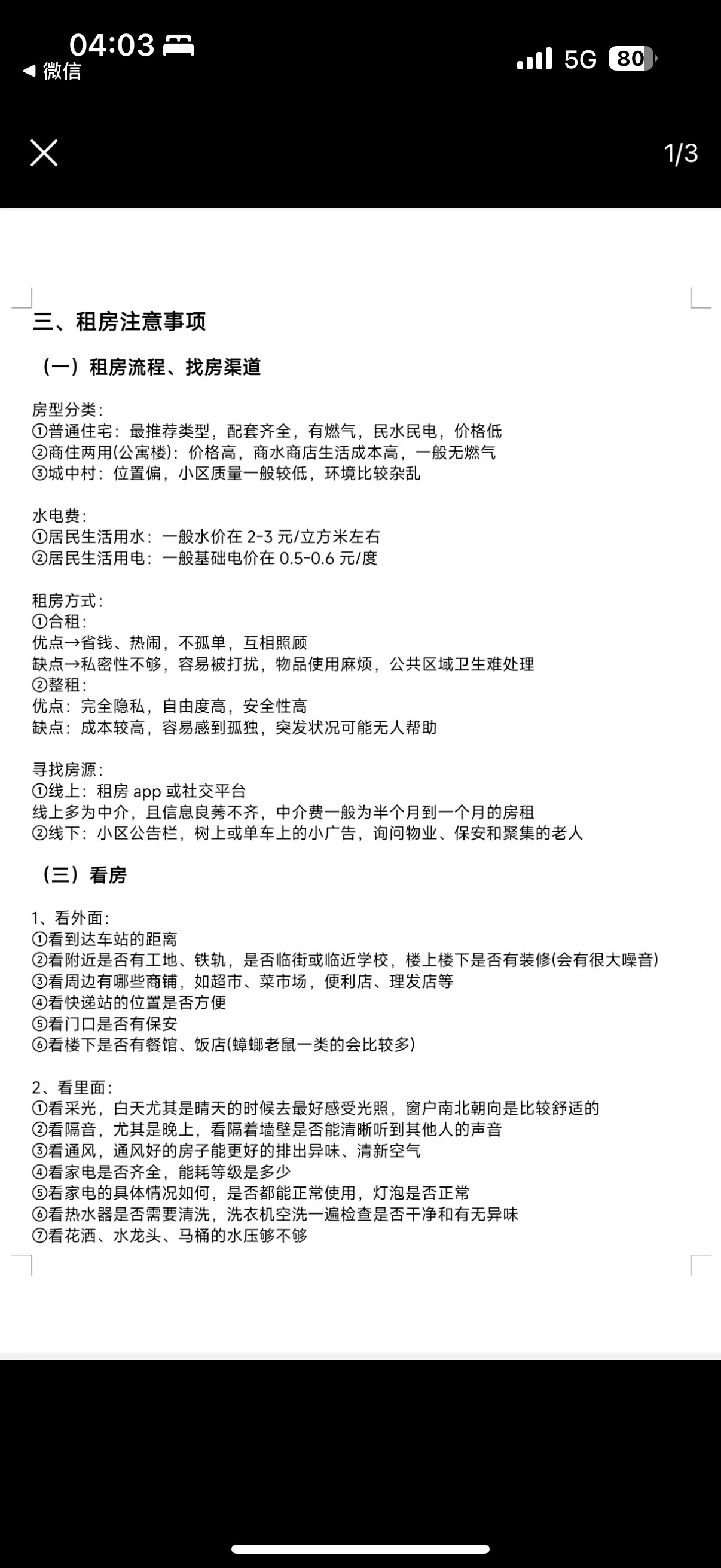
① Ordinary residential: the most recommended type, complete facilities, gas available, municipal water and electricity, low price
② Commercial‑residential mixed (apartment building): high price, commercial water and higher living costs, generally no gas
③ Urban village: remote location, community quality generally low, environment relatively messy
① Residential water consumption: usually about 2–3 CNY per cubic meter
② Residential electricity consumption: basic electricity price usually 0.5–0.6 CNY per kWh
① Shared rental:
Pros → saves money, lively, not lonely, mutual care
Cons → insufficient privacy, easy to be disturbed, inconvenient use of items, public area hygiene hard to manage
② Whole rental:
Pros → complete privacy, high freedom, high safety
Cons → higher cost, can feel lonely, emergencies may have no one to help
① Online: rental apps or social platforms
Online listings are mostly agents, and information quality varies; agency fee is usually half a month to one month’s rent
② Offline: community bulletin board, flyers on trees or bicycles, ask property management, security guards, and gathered elderly residents
① Distance to the nearest station
② Whether there are construction sites, railway tracks nearby, if it faces the street or a school, and if the upper or lower floors are under renovation (which can cause a lot of noise)
③ Nearby shops such as supermarkets, markets, convenience stores, barbershops, etc.
④ Convenience of the courier station location
⑤ Presence of security guard at the entrance
⑥ Whether there are restaurants or eateries downstairs (places with many cockroaches or rats are more common)
① Check lighting; the best time is on a sunny day to feel the natural light. South‑north window orientation is more comfortable
② Check sound insulation, especially at night—whether you can clearly hear other people’s voices through the walls
③ Check ventilation; good ventilation helps eliminate odors and brings in fresh air
④ Check whether appliances are complete and their energy‑efficiency rating
⑤ Examine the condition of appliances—whether they work normally, whether light bulbs are functional
⑥ See if the water heater needs cleaning; run the washing machine empty once to check for cleanliness and odors
⑦ Test water pressure of shower, faucet, and toilet
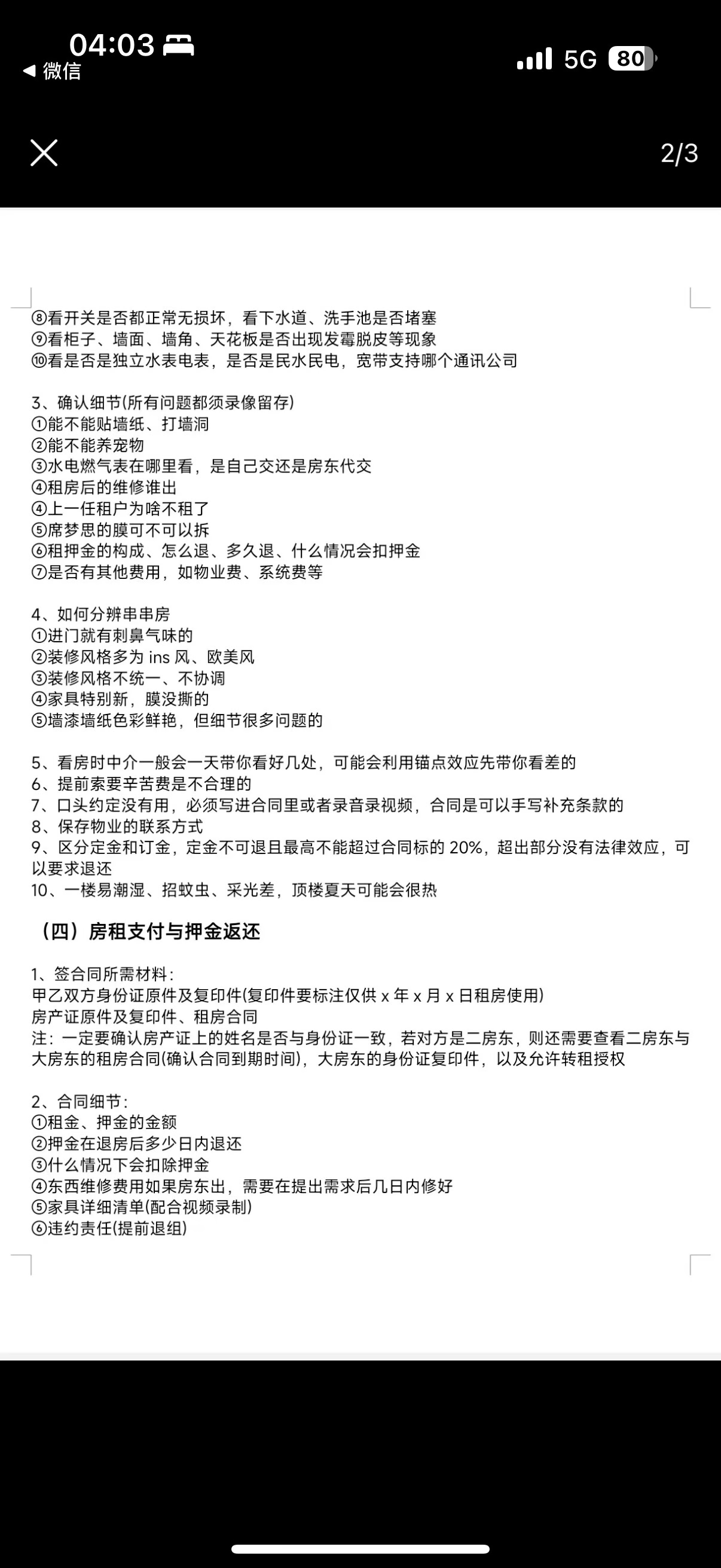
⑧ Verify that switches work without damage, and check for clogged drains or sinks
⑨ Look for mold, peeling paint, etc., on cabinets, walls, corners, and ceiling
⑩ Determine whether there are separate water and electricity meters, whether they are municipal utilities, and which telecom provider the broadband supports
① Whether you can paste wallpaper or drill holes in the wall
② Whether pets are allowed
③ Where the water, electricity, and gas meters are, and whether the tenant pays them or the landlord does
④ Who is responsible for repairs after moving in, and why the previous tenant left
⑤ Whether the mattress cover can be removed
⑥ Composition of the security deposit, how it is refunded, refund timeline, and conditions for deduction
⑦ Whether there are other fees such as property management fee, system fee, etc.
① A strong, unpleasant odor as soon as you enter
② Decoration style mostly “ins” (Instagram) or Western
③ Inconsistent or uncoordinated decoration style
④ Furniture looks brand‑new, with protective film still intact
⑤ Brightly colored wall paint or wallpaper but many hidden problems
Original and photocopy of both parties’ ID cards (photocopy must be marked “for rental use on YYYY‑MM‑DD only”), original and photocopy of the property deed, rental contract.
Note: Confirm that the name on the property deed matches the ID card. If the other party is a sub‑landlord, you also need to see the sub‑landlord’s contract with the primary landlord (confirm contract expiry), a photocopy of the primary landlord’s ID, and the authorization for sub‑letting.
① Rental amount and deposit amount
② How many days after vacating the deposit will be returned
③ Conditions under which the deposit will be deducted
④ If the landlord is responsible for repair costs, the repairs must be completed within a few days after the request is made
⑤ Detailed inventory of furniture (accompanied by video recording)
⑥ Breach of contract liability (early termination)
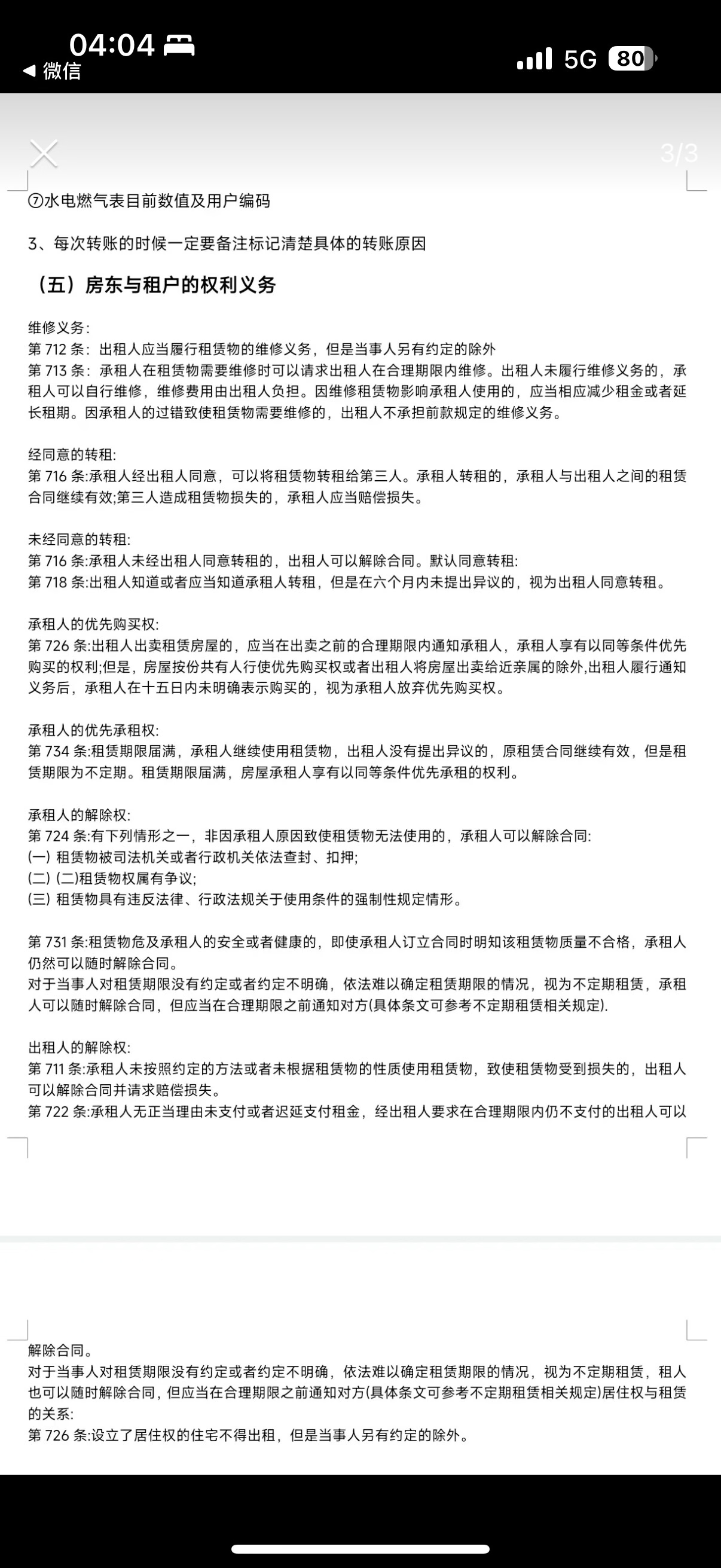
⑦ Current readings and user codes of water, electricity, and gas meters
Article 712: The lessor shall perform maintenance obligations for the leased property, unless the parties have other agreements.
Article 713: When the lessee needs maintenance, they may request the lessor to repair within a reasonable period. If the lessor fails to fulfill the obligation, the lessee may repair themselves and the cost is borne by the lessor. If the repair affects the lessee’s use, rent may be reduced or the lease term extended. If the lessee’s fault causes the need for repair, the lessor is not responsible for the maintenance under the preceding clause.
Article 716: With the lessor’s consent, the lessee may sub‑let the leased property to a third party. The original lease between lessee and lessor remains effective; the lessee must compensate the lessor for any loss caused by the third party.
Article 716: If the lessee sub‑lets without the lessor’s consent, the lessor may terminate the contract.
Default Consent to Sub‑let:
Article 718: If the lessor knows or should know of the sub‑let and does not raise an objection within six months, it is deemed that the lessor consents to the sub‑let.
Article 726: When the lessor intends to sell the leased house, they must notify the lessee within a reasonable period before the sale. The lessee has the right of first purchase on equal terms, except when co‑owners exercise the right or the lessor sells to close relatives. If the lessor fulfills the notice obligation and the lessee does not express a clear intention to purchase within fifteen days, the lessee is deemed to have waived the right.
Article 734: When the lease term expires and the lessee continues to occupy the property without objection from the lessor, the original lease remains effective but becomes indefinite. Upon expiry, the lessee has the right of first lease on equal terms.
Article 724: The lessee may terminate the contract if any of the following occurs, not caused by the lessee: (1) the property is seized or detained by judicial or administrative authorities; (2) there is a dispute over the property’s ownership; (3) the property violates mandatory legal or regulatory conditions for use.
Article 731: If the property endangers the lessee’s safety or health, even if the lessee knew of the defect when signing, the lessee may terminate the contract at any time.
If the lease term is unspecified or unclear, it is treated as an indefinite lease; the lessee may terminate at any time but must notify the other party within a reasonable period (refer to regulations on indefinite leases).
Article 711: If the lessee does not use the property as agreed or in a manner inconsistent with its nature, causing damage, the lessor may terminate the contract and claim compensation.
Article 722: If the lessee fails to pay rent without justification or delays payment, and does not pay after the lessor’s reasonable request within a set period, the lessor may terminate the contract.
If the lease term is unspecified or unclear, it is treated as an indefinite lease; the lessor may also terminate at any time but must notify the other party within a reasonable period (refer to regulations on indefinite leases).
Article 726: Residential units that have established a right of residence may not be leased, unless the parties agree otherwise.
If you’re a few years older and have overseas experience, sola won’t be able to take the selection exam for the appointment.
That’s not exactly the case.
The restriction concerning overseas experience applies to the public security (police); the police do not accept applicants who have been abroad for more than six months without official business, as explicitly stipulated.
The heated discussion about overseas experience in the selection recruitment actually stems from the fact that in previous years Guangdong’s selection would include students from QS Top 100 universities within the selection pool (comparable to domestic 985 universities), but not this year. The prevailing view now is that it’s still because too many second‑tier university graduates obtain a low‑quality master’s degree and then enter the system. Ultimately, it depends on whether other provinces will follow suit; I recall that before the selection, about a dozen provinces recruited from QS 100 or similarly ranked schools.
Maybe it will tighten up in a few years (that’s what I mean)