《世上为什么要有图书馆》からWeChat公式アカウント、碑林図書館へ

起点是这样的一篇写碑林图书馆如何建成的推送:
我,建了一座没有烂书的公共图书馆

选书读书一直是非常幸福的事 :smiling_face_with_three_hearts:Q 在前十八岁时经常出入图书馆借书,不报任何目的去阅读。遗憾的是上大学后进图书馆更多是为了学业

但读推送时印象最深刻的其实是这一段:

但是建图书馆的事儿不能再拖了。国家公共文化服务评定条例规定,2020 年底每一个区县都必须有公共图书馆,最低面积三千平方米,如果没有,各级领导是要问责的。但是想在碑林区找到一片合适的「三千平方米」,不是一件容易的事情。碑林区有「两最」:一是西安市面积最小的区县,仅二十三平方公里;二是西安市单位面积 GDP 最高的区县,商业繁华,旺铺抢手。

Q 不是西安人,在西安呆的最久的区应该就是碑林区,但从未孤立地将碑林区单独思考单独看待。
(不知道会不会有人称自己为碑林区人)但我或许也算是碑林的学生,于是买了推送中提到的《世上为什么要有图书馆》,尝试去看图书馆建立的背后究竟是什么 :cat_hugs:
毕竟谁没想过当图书管理员呢

这次阅读的终点不是合上书时,应该在步入碑林图书馆的那一刻。

本帖比起系统性的读书感悟更像是一种随手写在书边的注记,但由于纸质书笔记难以查阅保存,也想和门友分享记录离我们很近的图书馆的一本书,顺便活跃一下读书分享模块 :rofl:所以留在了这里

「いいね!」 6

初到南院门

她的淡妆、齐肩发、西服、胸针、过膝合体裙、尖头高跟鞋都足够正式,但她的身体是松驰的,靠在椅背上,肩膀稍稍倾斜,手随意垂着,笑的时候咯咯咯,连带着腰部晃一下。
随后,按照领导秘书说定的时间,九点整,一分不差,她带我下楼,敲开另一扇门。这个办公室更大,此刻她突然变得拘谨,调整脚尖位置,绷紧身体,微微前倾,声音压低。

刚翻开就是很生动的写人,写从上到下的衣着有一种扫视感,观察得也很好 :cry:Q 写东西写好烂

初到南院门

“阅’,这个词,我见过,我批改学生作业的时候会用。但是“阅处”“阅示”,完全陌生。我三十多年的词汇库里没有这两个词。我认识这几个文字的表象,却完全不知道背后的含义。我要根据这儿个几个陌生的词汇,对这些文件做些什么事?
栗主任教我:“在您的名字上画圈圈,是最轻的,表明这事儿您知道了。签一个字儿‘阅’,加重语气,表明您阅读过了。‘阅处‘那是上级领导批给您的,您要拿出具体的方案做答复。‘阅示’,那是下级请您指示的,您来告诉科室具体该怎么做。

:exploding_head: :exploding_head:

初到南院门

图文之间对我的重视,在我心里撩起一丁点快乐。我的表情够不够好看?拍摄的角度合不合适?我把文字来回读了几遍,感觉自己真的“为我区公共文化建设”做了贡献。
读第五遍或者第八遍时,我意识到不对劲,我在咀嚼自己的位置,嘴里是甜的。我贪恋这份甜,再咀嚼下去,以后会对自己职位、走位、排位、地位高度在意,发展成对权力的欲望,不断膨大,吞掉我。这种咀嚼已经损伤我的味蕾,我是个文学教师,我竟然丧失了分辨语言文字好坏的能力,以为
“为我区公共文化建设……”这样复制的话语里包含了我的什么实质性功绩。那天,我不过撩起来一块红绸缎而已。

:exploding_head:

Previously, I visited the Shaanxi Provincial Library’s High‑tech Zone branch and took a look around. Inside there were roughly two groups of people: one group had seen the news of the new library opening online and came with their whole families to visit, and the other group were there to study (a quick peek showed that most were middle‑aged people preparing for civil service exams, teaching positions, or various other tests. Some looked quite old, but like the students in the library, they were using an iPad, several books, and paper and pens to write and draw seriously).

For modern people, there are so many ways to acquire knowledge, and obtaining books is generally very convenient and cheap, so a reading space like this may indeed not be much needed.

So J borrowed a small book describing Japan’s Heian period and took it along on a trip to Japan.

While physical bookstores in China have basically become obsolete (excluding those for coffee and photo‑taking), Japanese bookstores still thrive and are easily accessible to Japanese people.

Basically, in larger shopping malls and at train stations, which play the most important role in Japanese daily life, bookstores are everywhere.

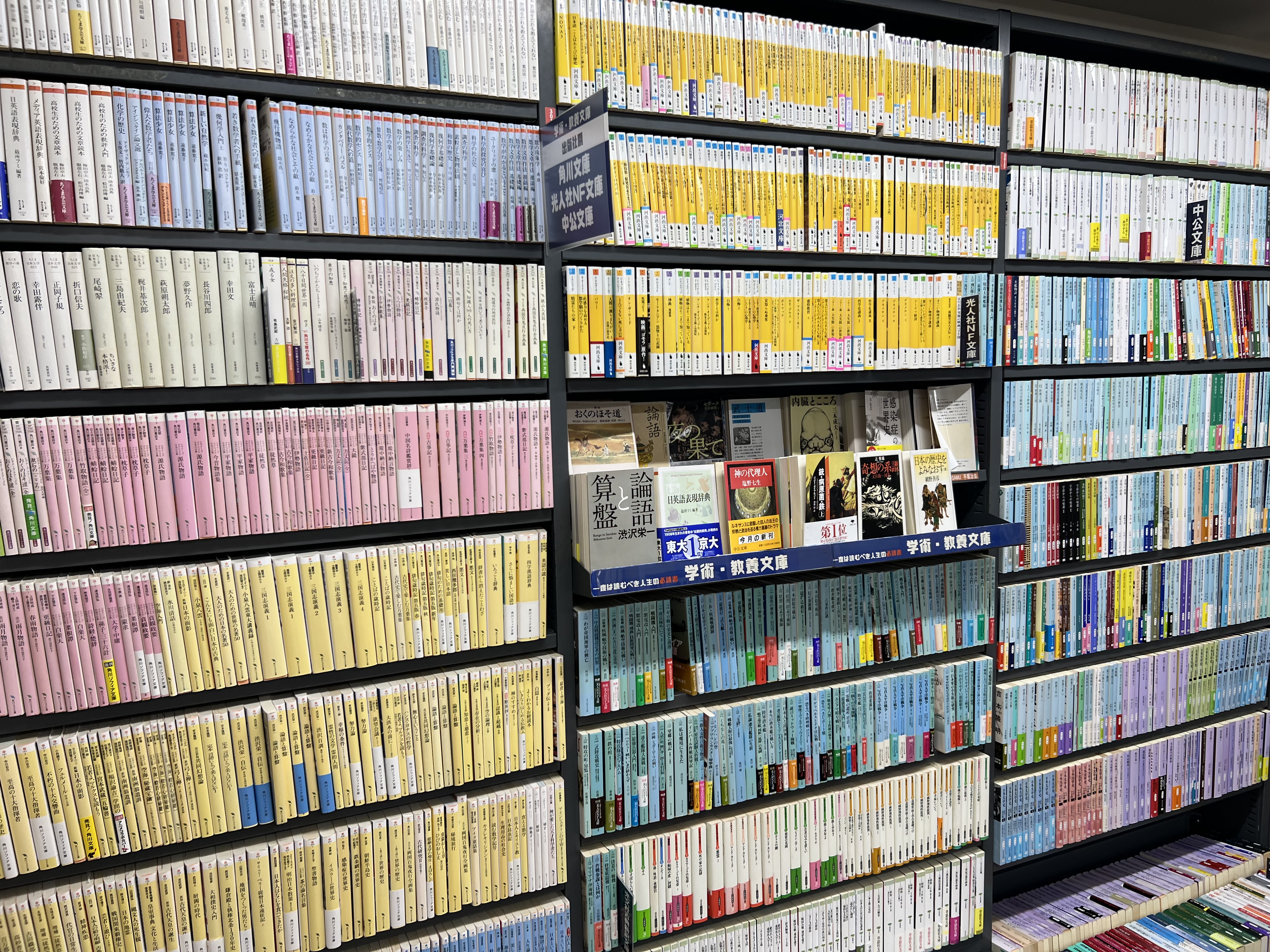
The Japanese publishing industry has its own peculiarities—namely “bunko” (paperback) and “shinsho” (new books). These books are roughly palm‑size, easy to hold with one hand and can be conveniently slipped into a pocket. In Japanese bookstores, especially near stations, you’ll find rows upon rows of bunko shelves.

These types of books don’t contain much content; they generally introduce a single topic or condense a classic work into a small booklet (a market in China now dominated by short videos). They are perfect for picking up on a train, whether seated or standing, and reading a few pages. In fact, many people actually do this.

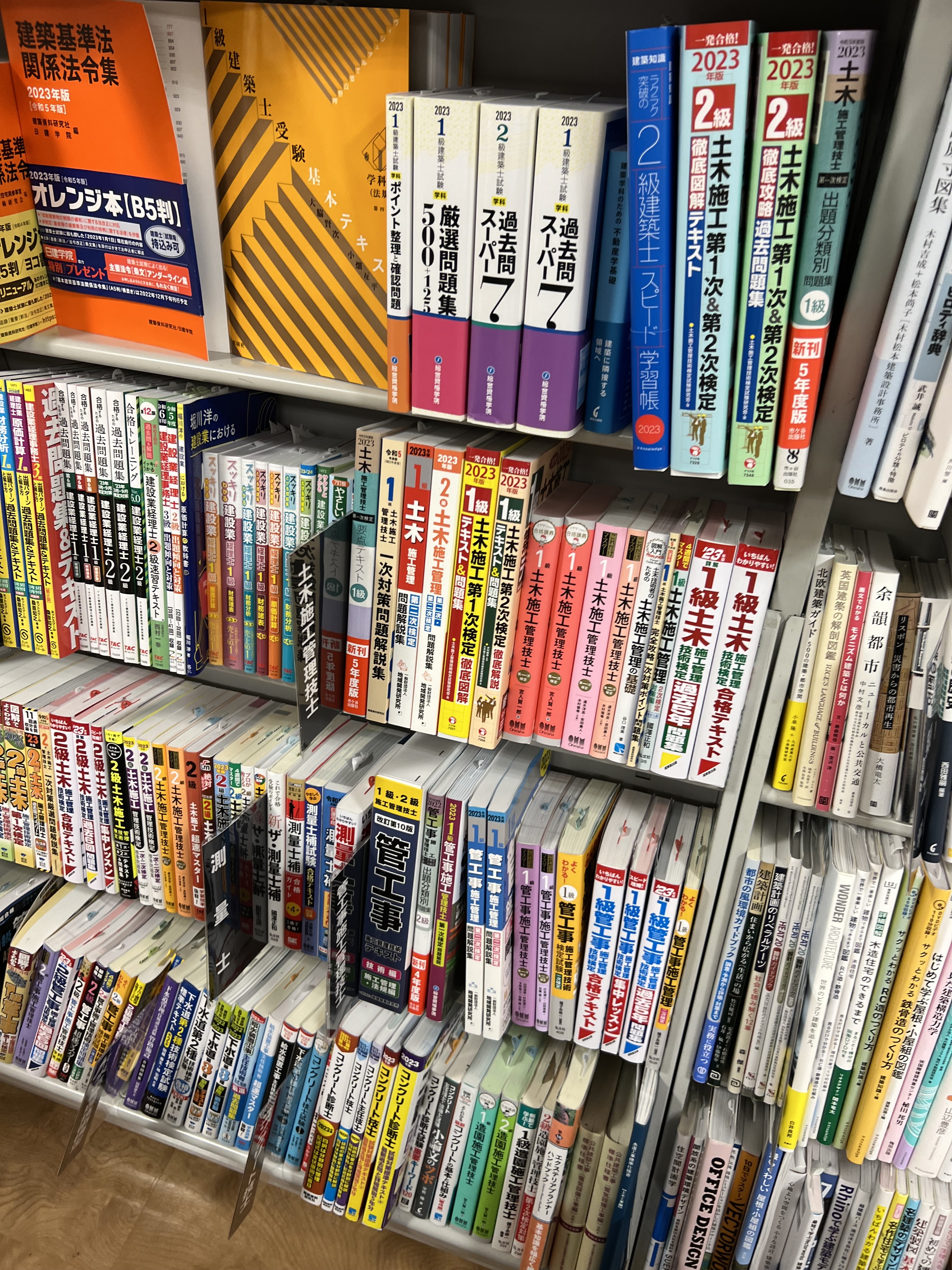
During the trip, J would often enter any bookstore he came across for a quick look around. Of course, the language barrier made the content hard to understand, but simply browsing all the titles on the shelves was already very entertaining.
IMG_5391
IMG_5755
IMG_5757

「いいね!」 5

我还没有去过陕西的图书馆(钱图除外),但看上去和大部分图书馆是一致的。一方面为图书馆提供了安静平和的学习环境而感到开心,另一方面又希望图书馆里只是在读书的人能更多 :cry:
在家读书和在图书馆读书的感觉还是很不同的 :rofl: 就像 Q 不喜欢电子书一样,某种我自己也不知道为什么的执着
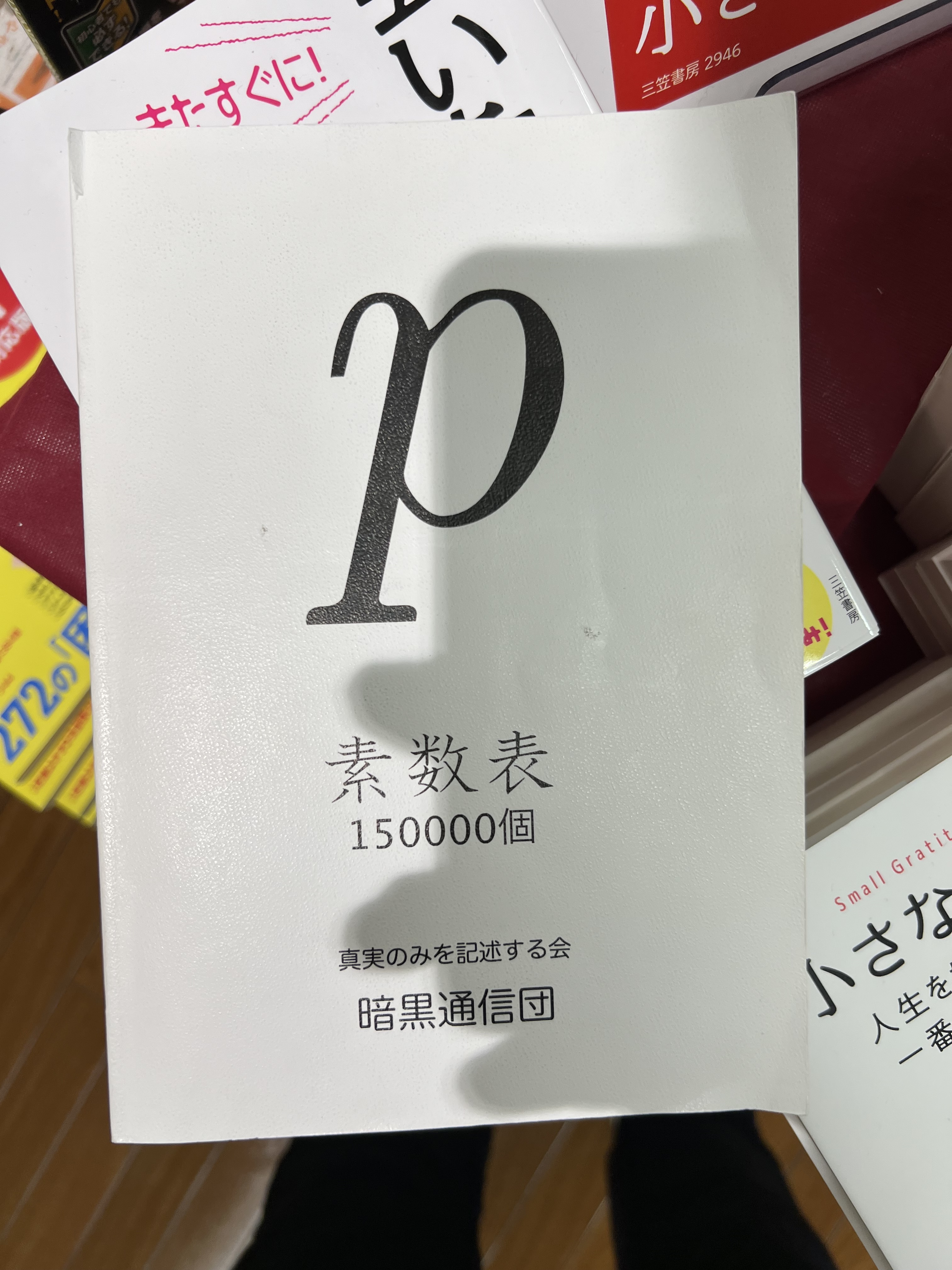
(素数表这本书里的内容真的是 150000 个素数吗)

「いいね!」 2

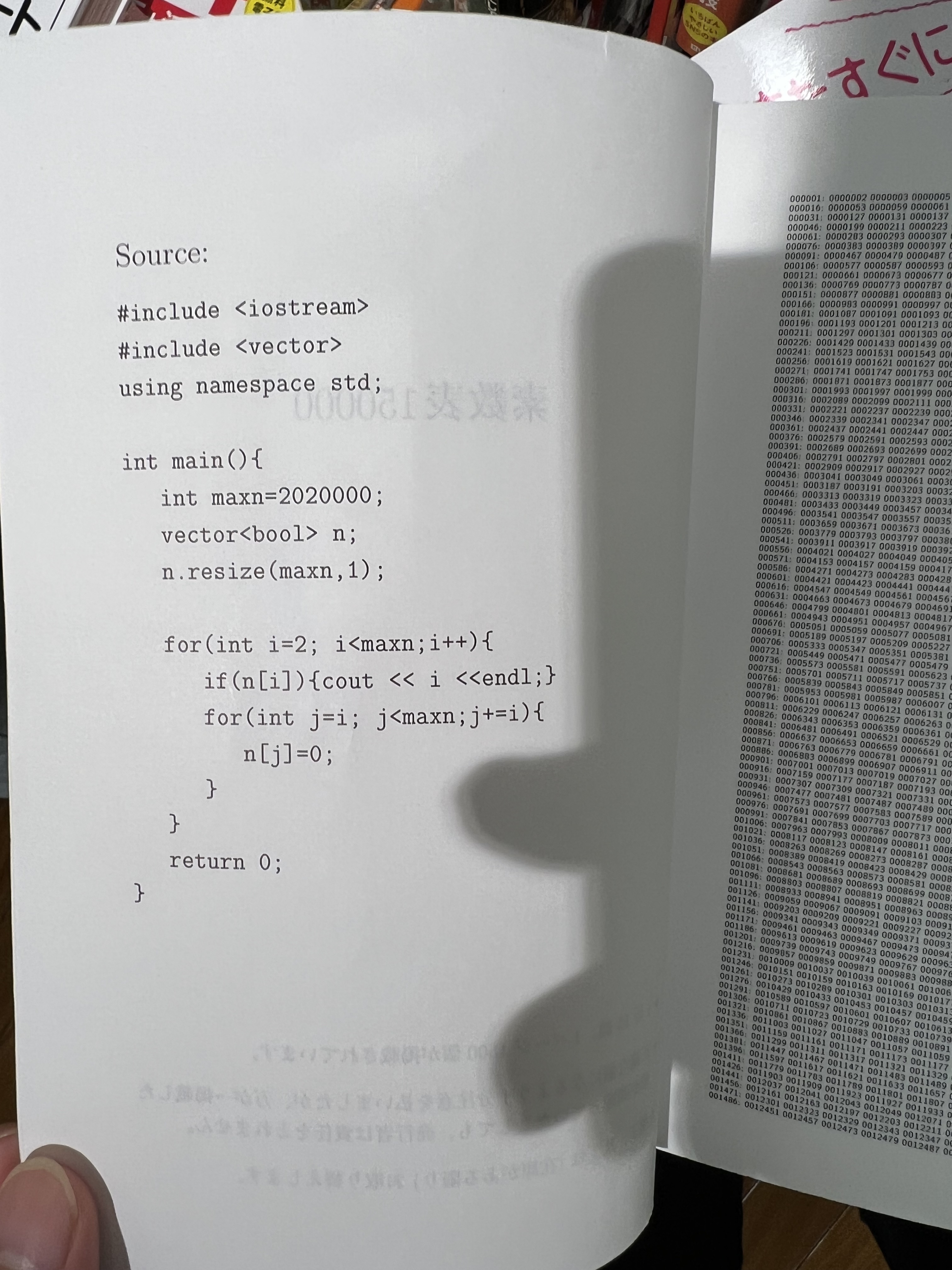
Only captured the first page; it contains the first 150,000 prime numbers printed in extremely tiny text.

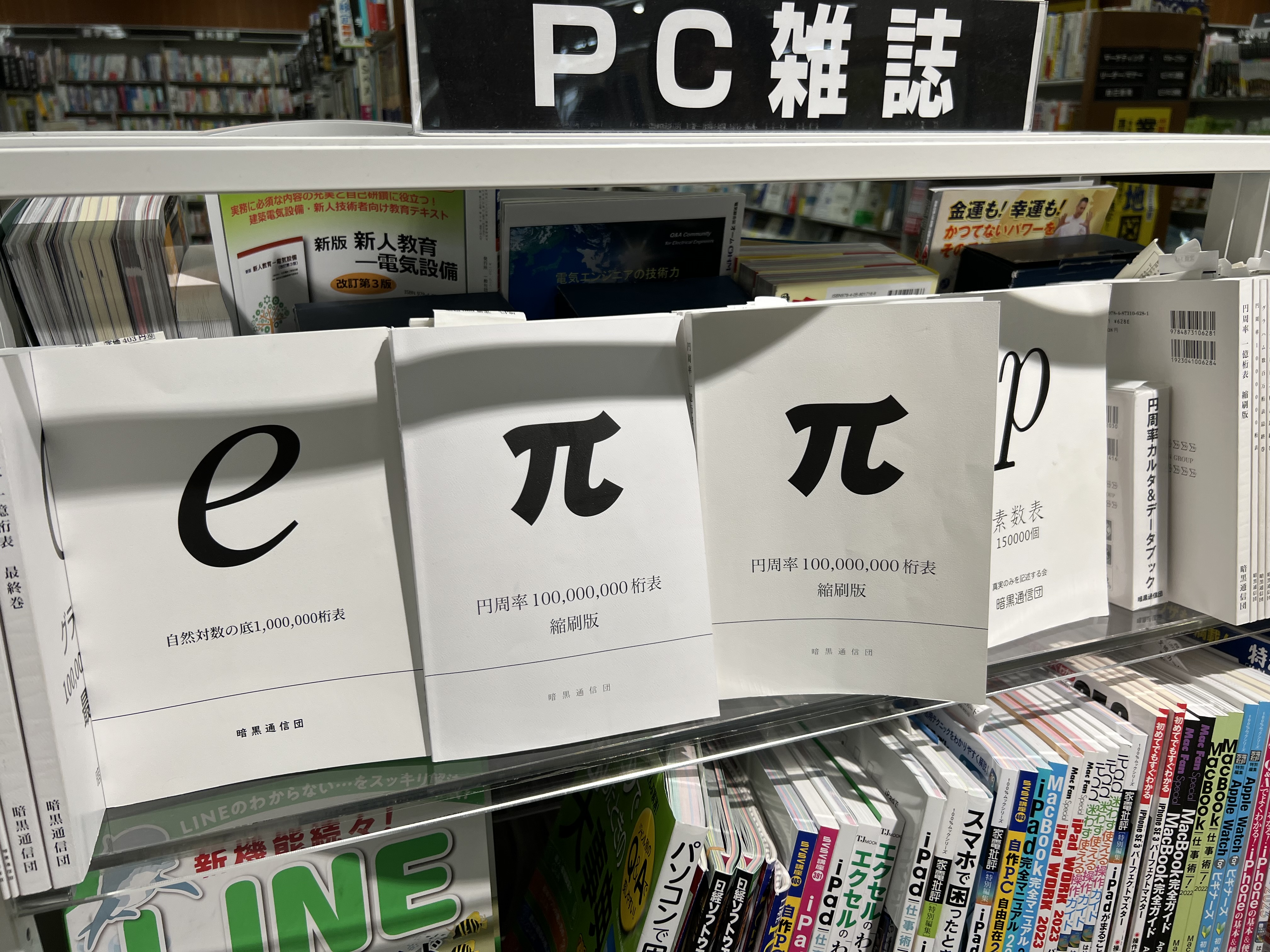
The same series also includes the largest perfect number discovered by humanity so far, printed in a thick book.

IMG_5756
IMG_5754

「いいね!」 1

我小时候家离市图书馆很近,就是在那里我第一次看了涉及编程的书——Flash 里面的脚本语言 ActionScript,很可惜,当时没遇到讲 Python 的书

「いいね!」 2

J also only likes physical books and will spare no expense to acquire imported original editions, even though a ready-made electronic version is available.

「いいね!」 2

Getting into programming from the library is still quite rare.

大一的时候非常喜欢逛各种图书馆的文史阅览区,在自己感兴趣的书附近经常能挖到宝

「いいね!」 4

“娟娟发屋”与睡觉无聊

杨国庆也有这样的困境。临帖时最舒服,就像读书一样,徜徉在文字里面,在幻觉中接近作者,觉得和伟人同道是自己的荣幸。

读纸质书的时候不常碰电子产品,这段话比起上次的记录已经有了多半本书的距离。
阅读的时候最轻松愉悦,仅仅只是写点读书笔记表达时,就已经开始疲惫了。

「いいね!」 2

“娟娟发屋”与睡觉无聊

他搭乘了很远的公交去,在“姥爷”家见到赵铁山真迹。“姥爷”问他:“你知道,这个字,这种写法的源头在哪里吗?”杨国庆答不上来。在那个小小的书房里,老人为他展开古代金石碑帖,“我们一起找这个字的根儿,要在根儿上面学”。这是他的第二位书法老师,带他学习篆书以及碑帖。

好安静的幸福

「いいね!」 1

本の前半は事柄を書き、後半は場所と人について書き始め、読んでいてとても不思議に感じました。
跟着书写碑林区的足迹去探访碑林区,有一种被碑林接纳的感觉——之前我只是在西交生活。
一个写图书馆的书最后又写起了人,很奇妙,又理所应当,因为书是由人写的,而人们阅读书。
写人的线索也很明确,作者请不同的人为她推荐书单,而在不同领域深耕的人们当然是因为自己的人生经历才会得出这样一份书单。
书塑造了人,人又因此去挑选下一本书。

「いいね!」 3