Now it’s early 2008, and as a trading enthusiast you have received two offers. You choose:
-
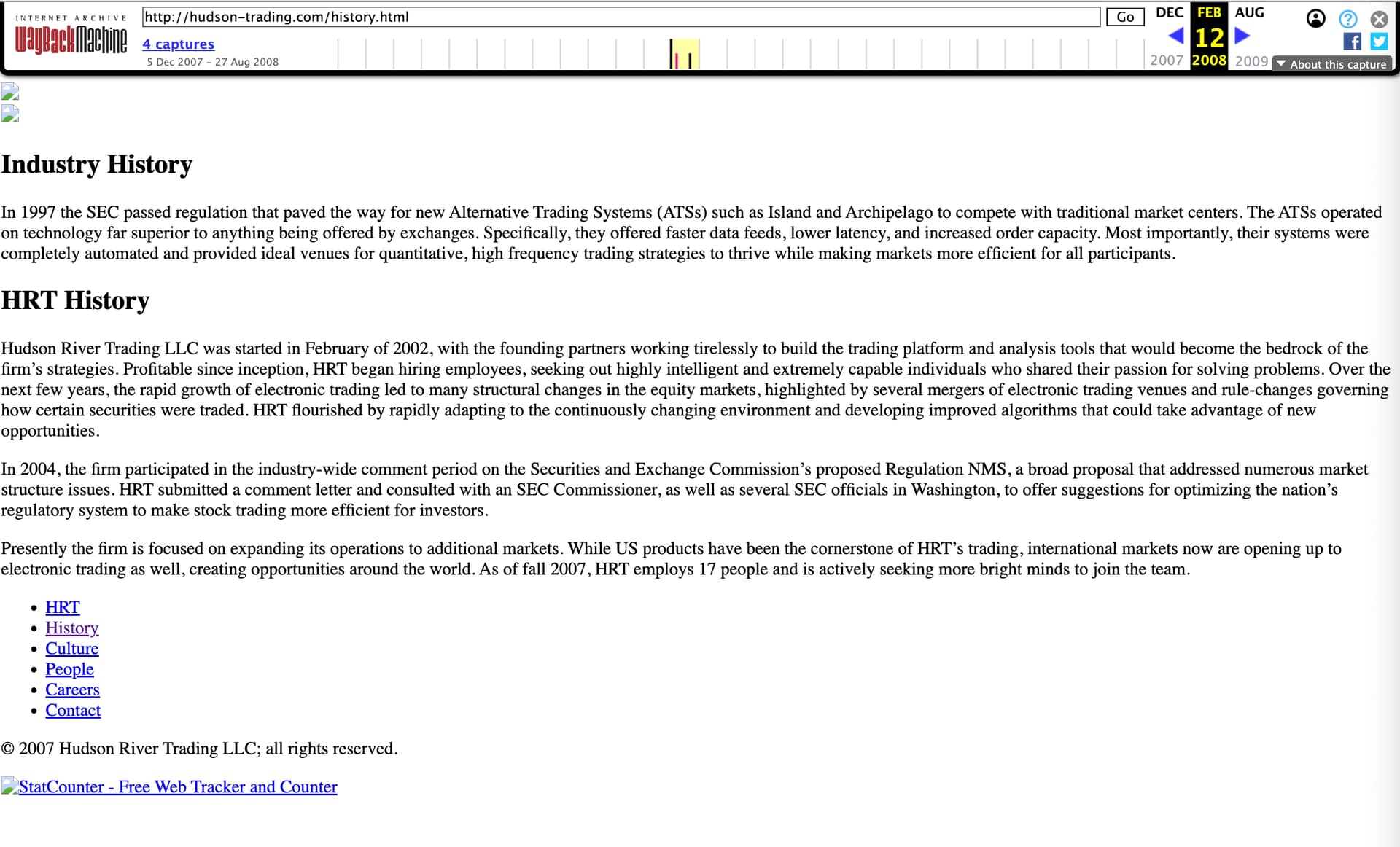
Join the mysterious small firm Hudson River Trading LLC (17 people)
-
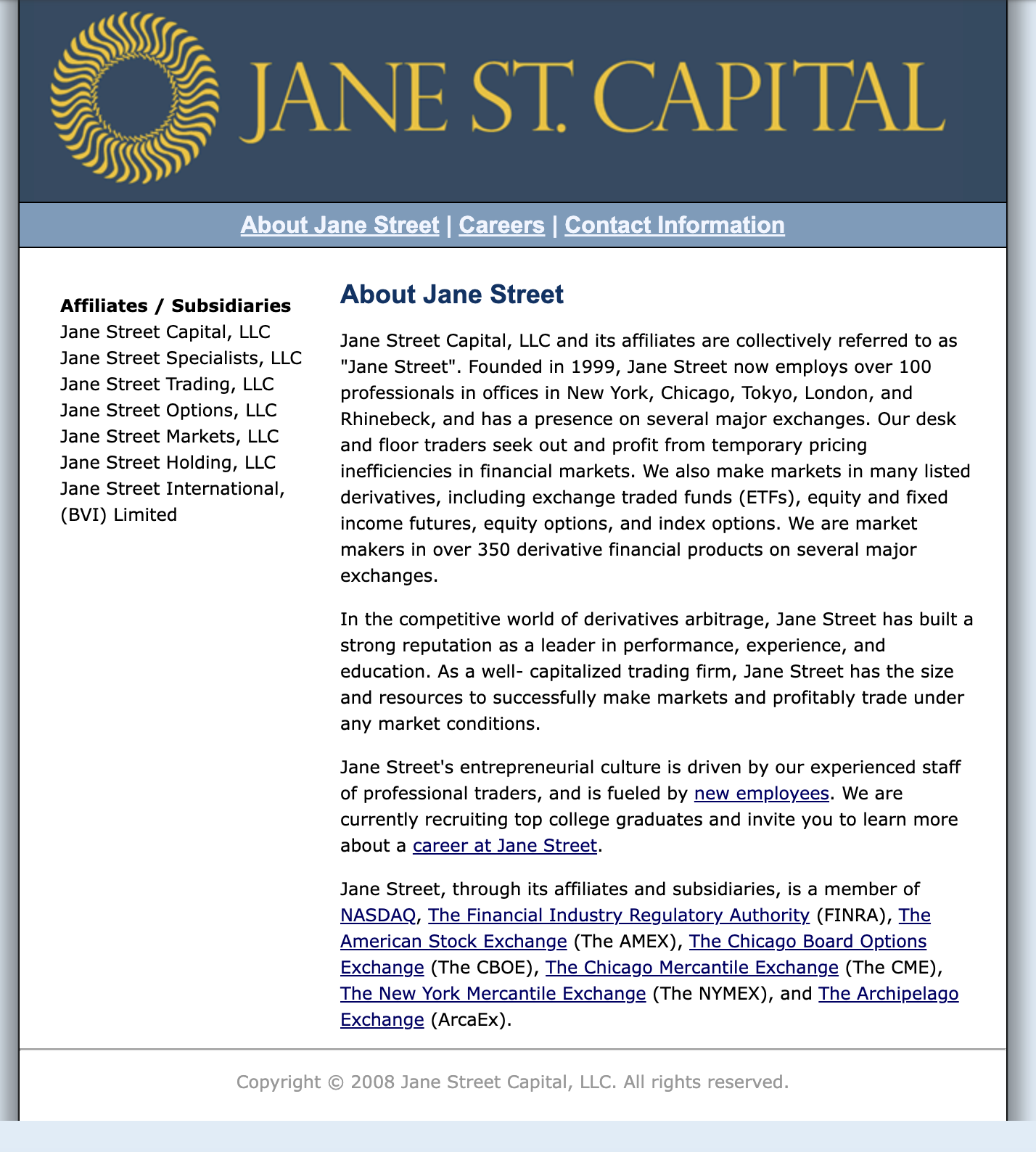
Join the mysterious mid-sized firm Jane St. Capital (100 people)
Now it’s early 2008, and as a trading enthusiast you have received two offers. You choose:
Join the mysterious small firm Hudson River Trading LLC (17 people)
Join the mysterious mid-sized firm Jane St. Capital (100 people)
I choose to raise funds all in Bitcoin
High, really high. However, the most efficient approach would have been to develop GPU mining right at the beginning of Bitcoin.
Join the cryptographic small firm HRT; because the team is small, it feels like a family.
Selling shovels carries less risk than digging for gold yourself, and yields higher returns.
I won’t have this opportunity in this lifetime.
It’s 2025 now, what will you choose?
Bet everything on entering the life sciences industry
The 21st century is the era of life sciences. After graduation, in the mid‑21st generation, become an industry giant
or a mysterious virus outbreak, become a world‑saving hero
Going off-topic, meow~
They are answering my off‑topic question 
HRT, I feel that high‑frequency Sharp has high issuance, a lot of money and is stable, and the small team means there’s more chance to take the leadership.
Become a partner
Then I guess I’ll have to bring funding into the group  (And it feels like those who do high‑frequency trading generally aren’t inclined to raise capital; if they have a good strategy they just keep it to themselves and enjoy it, why share a piece of the pie with others?)
HRT’s partner Oaz Nir is the one who joined in 2009 and became a Partner, and Castle also has several who have become Partners.
In this industry, if a certain proportion of the company’s money is earned by you, they are still highly motivated to make people become partners, because the strategy typically wanes after about two years, and they need to retain high‑level talent.
It feels right, but I think the prerequisite is to become a high‑level trader At the same time, this certain proportion of money (how that proportion is divided) – for example, when a strategy is created, some people mine factors, some combine factors, and some handle the concrete execution strategy. I think it’s hard to assess the specific contribution ratios of these parts unless the entire strategy is produced by a single person. I believe this requires someone to work from a junior level up to at least a PM level.
I feel that you can only succeed by working at a company that keeps growing, and you have to stay for ten years. Only by joining a small firm might it be significantly easier to obtain equity, but that small firm must have the potential to become big.
Feels like this has become a classic question: if you were an investor, how would you invest in start ups?
Just replace investing money with investing time.
https://b23.tv/oZCbQ2f
Who knows what will happen in the future, meow
Continuously off-topic
Three newcomers have arrived at the substation: top graduates from 985 and C9, in Electrical Engineering, the king of engineering_ Jiaoda Gate_xjtumen